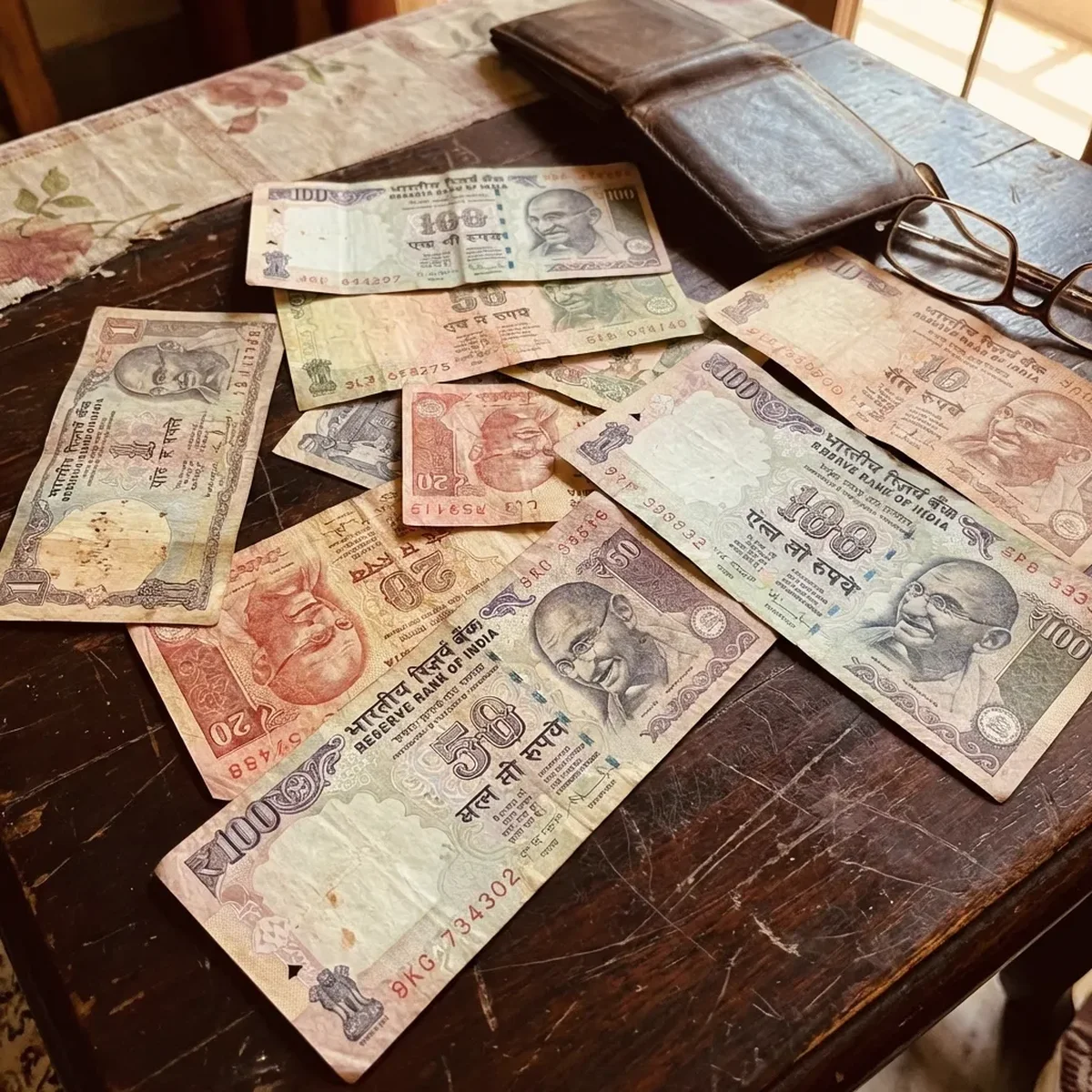
My Nana ji kept old currency notes in a steel almari. Not as a collection — as a warning. "Beta, yeh note dekho," he'd say, pulling out a faded brown ₹100 note from the 1970s. "When I started working, this was one month's rent. By the time I retired, it couldn't buy a week's vegetables."
India's inflation story is tame compared to what I'm about to show you. But Nana ji's worry wasn't irrational — he'd lived through periods when inflation in India hit 20-30%, when the rupee was nearly worthless internationally, when the government had to literally airlift gold reserves to London to avoid defaulting on loans.
This tutorial is about what happens when inflation goes beyond "prices are rising" to "money is dying." Real stories from countries where it happened. And a hard look at how close India has come — and whether it could happen here.
What Exactly Is Hyperinflation?
Economists define hyperinflation as monthly inflation exceeding 50%. Let me make that real for you:
At 50% monthly inflation, your ₹100 chai today costs ₹130 next month. ₹169 the month after. By year end, that chai costs ₹12,975. Your monthly salary on January 1st can't buy a week's groceries by December.
Normal India inflation (6%/year): ₹100 → ₹106 after one year
High India inflation (1991, ~14%/year): ₹100 → ₹114 after one year
Zimbabwe peak (2008): ₹100 → ₹100 would double every 24 hours
That's 79.6 billion percent per month. Not per year. Per month.
But numbers this big become meaningless. What actually matters is what happens to people. So let me tell you stories.
Germany, 1923: Jab Paisa Deewar Par Chipkate The
I first read about Weimar Germany's hyperinflation in school — Class 9 History, Chapter 3. The textbook treated it as a bullet point: "Germany printed money to pay war reparations. Prices rose. People suffered." That's like saying "the Titanic had a small water problem."
Here's what actually happened. After World War I, Germany owed enormous reparations to the Allies. The government couldn't pay through taxes, so they printed money. Lots of it. What started as manageable inflation in 1921 became a runaway train by 1923.
In January 1921, one US dollar bought 60 German marks. By November 1923, one dollar bought 4.2 trillion marks. Workers were paid twice daily — their wives would wait outside factories at lunch to grab the cash and run to shops before prices changed by evening.
People papered their walls with banknotes because the paper was literally cheaper than wallpaper. Children built towers of bundled currency like building blocks. A famous photograph shows a woman burning marks in her kitchen stove — the paper provided more heat than the coal it could buy.
Imagine this in Indian terms: you work at TCS, earn ₹8 lakh per year. By December, that ₹8 lakh can't buy a bag of atta. Your PPF? Worthless. Your FD? The number is the same but it buys nothing. Your parents' savings — their entire life of careful planning — gone. Not stolen. Just... evaporated.
How It Ended
Germany introduced a completely new currency — the Rentenmark — backed by land and industrial goods. They declared 1 trillion old marks = 1 new Rentenmark. Overnight, everyone's old savings became literally zero. People who'd hoarded gold, foreign currency, or physical goods survived. Those who'd "saved responsibly" in banks were wiped out.
The cruelest irony: the people who followed the rules — saved carefully, avoided speculation, trusted the system — were punished the most.

A modern Indian supermarket with today's prices
Zimbabwe, 2008: 100 Trillion Dollar Notes
I have a Zimbabwean 100 trillion dollar note. Bought it on Amazon for ₹500. It's a real banknote — not a novelty item. The Zimbabwean government actually printed 100,000,000,000,000 on a piece of paper and expected people to use it to buy bread.
Zimbabwe's crisis started with land reform in the early 2000s under Robert Mugabe. Productive farmland was seized and redistributed, destroying agricultural output. The government printed money to cover budget gaps. International sanctions piled on. The economy spiraled.
At peak hyperinflation in November 2008, prices doubled every 24.7 hours. A loaf of bread that cost Z$1 in the morning might cost Z$2 by afternoon and Z$4 by the next morning.
| Item | Price (2006) | Price (Nov 2008) |
|---|---|---|
| Loaf of bread | Z$200 | Z$10 billion+ |
| Bus fare | Z$500 | Z$1 trillion+ |
| Sugar (2 kg) | Z$1,000 | Can't even calculate |
ATMs had withdrawal limits, but by the time you reached the front of the queue (which could take 5-6 hours), the withdrawn amount was worthless. Your job became managing money — running from bank to shop before prices updated — not actually working.
People abandoned the Zimbabwean dollar entirely. They switched to US dollars, South African rand, or pure barter. Some professionals were paid in petrol coupons — not metaphorically, actual fuel vouchers — because those held value better than currency.
Zimbabwe eventually killed its own currency in 2009, officially dollarizing the economy. They tried to bring back the Zimbabwean dollar in 2019. It immediately lost 90% of its value.
Venezuela, 2018: The Professor Who Couldn't Buy Eggs
Venezuela hits differently because it wasn't a post-war failed state. It was an oil-rich country with modern infrastructure, universities, hospitals — a functioning middle class. Like a South American version of what Indians aspire to: a growing economy with rising living standards.
Then oil prices crashed in 2014. The government had spent every petrodollar and then some. Corruption was staggering. Price controls destroyed production. The currency was manipulated beyond recognition.
University professors — educated, middle-class, the backbone of society — couldn't afford a carton of eggs. Monthly salaries that once provided comfortable lives couldn't cover a week's groceries. Students stopped attending classes because there was no point — the degree wouldn't earn enough for a meal.
People carried backpacks full of cash to buy basic items. Then the government printed larger denomination notes. Then inflation outran those too. Digital payment systems had daily limits — so you'd buy half your groceries, hit the limit, return tomorrow hoping prices hadn't doubled overnight.
🚨 The Human Cost
Venezuela's hyperinflation caused the largest refugee crisis in Latin American history. Over 7 million people fled — roughly 25% of the population. Average body weight dropped 11 kg because people couldn't afford food. Hospitals ran out of medicine, soap, even rubber gloves. This wasn't a century ago. This was 2018.
India 1991: When We Almost Went Over the Edge
Now here's the story most Indians don't know well enough. In 1991, India didn't experience hyperinflation — but we came sickeningly close to a complete economic collapse that could have triggered one.
By June 1991, India had foreign exchange reserves worth only two weeks of imports. Read that again. The country had enough dollars to buy foreign goods for fourteen days. After that — nothing. No oil imports. No important machinery. No debt payments.
Inflation was already at 14%. The fiscal deficit was 8.4% of GDP. The government literally shipped 47 tonnes of gold to the Bank of England as collateral for a $400 million emergency loan. Forty-seven tonnes. Airlifted in secret. That's how desperate things were.
What saved India? Manmohan Singh's emergency reforms — devaluing the rupee, opening the economy, reducing import barriers, inviting foreign investment. They worked, but caused real pain first: the rupee dropped from ₹17.90 to ₹25.95 per dollar (roughly 45%). Import prices shot up. Petrol jumped. Common people bore the brunt while economists debated whether the reforms were right. They probably were, in retrospect, but I think it's worth remembering that the "right" economic decision and the "painless" one are almost never the same.
What's scary — and this is maybe the part that sticks with me most — is how quickly an economy can go from "stressed but managing" to "on the edge of collapse." India in early 1991 wasn't Zimbabwe or Venezuela. It was a functioning democracy with institutions, a central bank, and educated policymakers. And it was still two bad weeks from defaulting on its debts. The margin between stability and crisis is thinner than most of us want to believe. The 1991 episode should probably be taught in every school, not just economics classes. It's the closest India has come to the kind of disaster this article describes, and the only reason we're not telling a very different story today is that a handful of people made the right calls under enormous pressure.
If the reforms had failed or been delayed — if politics had blocked the changes — India could have defaulted on international loans. A default would have triggered currency collapse. Currency collapse would have caused import prices (oil, edible oil, fertilizer) to skyrocket. Important goods would have become unaffordable. And that's the textbook recipe for hyperinflation spiral.
We were 2-3 bad decisions away from becoming 1990s-era Venezuela.
The Patterns: What Every Hyperinflation Has in Common
Pattern 1: Trust Dies Before Currency Dies
In every case — Germany, Zimbabwe, Venezuela — the currency didn't die from printing alone. It died when people stopped believing it had value. The moment farmers refuse to sell grain for currency, the moment shopkeepers update prices hourly, the moment your neighbor starts hoarding rice instead of saving money — that's when hyperinflation becomes self-fulfilling.
In India, we saw hints of this during demonetization in 2016. Not hyperinflation, but a trust crisis — people queuing at ATMs, hoarding cash, refusing digital payments. Trust in currency is fragile. More fragile than we'd like to think.
Pattern 2: The Middle Class Gets Destroyed
Hyperinflation is most brutal to people who did everything right — saved money, bought insurance, planned retirement. Their prudence becomes punishment. Real assets survive: gold (always gold), land, foreign currency, skills. Paper assets — FDs, pension funds, insurance policies — become expensive toilet paper.
This is why Indian families' obsession with gold isn't irrational — it's generational wisdom. Your Nani's gold survived every crisis, every devaluation, every government policy change. The FD your grandfather trusted? It only works when the system works.
Pattern 3: Wages Can Never Keep Up
In every hyperinflation, there's a race between prices and wages. Prices always win. Companies can't adjust salaries fast enough. By the time your revised salary hits your account, it buys less than your old salary did two months ago. Working full-time makes you poorer every pay cycle.
Pattern 4: Society Unravels
When money stops working, social contracts break down. Crime rises — not because people become evil, but because survival overrides morality. Black markets flourish. Corruption becomes necessary for basic life. Families break apart. Education becomes pointless because degrees can't feed families.
Could Hyperinflation Happen in India?
Honestly? Probably not. But not for the comforting reasons you might think.
India's protection comes from several factors:
- RBI independence: The Reserve Bank of India, despite political pressure, has maintained relative autonomy in monetary policy. They've resisted the temptation to simply print money to cover deficits.
- Foreign reserves: India currently holds $600+ billion in forex reserves — far from the 2-week disaster of 1991. This buffer prevents the kind of currency panic that triggers hyperinflation.
- Diversified economy: Unlike Venezuela (oil-dependent) or Zimbabwe (agriculture-dependent), India's economy is diversified across services, manufacturing, and agriculture.
- Institutional checks: However imperfect, India has democratic institutions, a free press, and independent courts that serve as checks on catastrophic policy decisions.
But — and this is a big but — the slow-motion wealth transfer of persistent 5-7% inflation is real and ongoing. India may never hit 50% monthly inflation. But 7% annual inflation compounding over a lifetime silently destroys middle-class wealth just as surely, just more slowly.
That's the real lesson of hyperinflation stories for Indians: the extreme cases show you what inflation does at fast speeds. Our 6-7% inflation does the same thing — just slowly enough that we don't panic. It's the frog in gradually boiling water. You don't notice because the change is 0.5% this month, 0.6% next month. But compound those over 20 years and your money has lost roughly 70% of its purchasing power. That's not hyperinflation by definition, but it probably feels like it to a retiree trying to live on a fixed pension. I think that's maybe the most unsettling takeaway from studying these extreme cases — the mechanism is the same, only the speed differs.
What Survivors Wish Everyone Understood
Based on accounts I've read from hyperinflation survivors across countries, three pieces of wisdom emerge consistently:
"Keep something outside the system." Gold, foreign currency, skills that work across borders — diversification isn't just investment advice. It's survival strategy. If 100% of your wealth is in rupee-denominated instruments in Indian banks, your entire financial life depends on one government, one central bank, one currency doing the right thing. That's concentration risk on a civilizational scale.
"It's not about blame." Once hyperinflation starts, blaming the government or the banks or the foreigners is irrelevant. Focus on surviving, not on fault. The Weimar Germans who spent energy protesting went hungry. The ones who quietly traded, bartered, and adapted survived.
"Money is just a story." This is the deepest insight. Currency works because we collectively agree it works. The ₹500 note in your wallet has no inherent value — it's cotton and ink. Its value is a shared fiction. When the fiction breaks, have something real: skills, relationships, gold, land.
Nana ji understood this intuitively. That's why he kept old notes — not as nostalgia, but as a reminder that the number printed on paper can become meaningless. What matters is what you can actually buy with it.
I think that's probably the best way to think about inflation in general, not just the extreme cases. Your salary number going up doesn't matter if prices go up faster. Your savings account balance growing at 4% doesn't matter if inflation is 6%. The numbers are just stories we tell ourselves. What counts is purchasing power — how many tomatoes, how many school terms, how many doctor visits your money can buy. That's the real number. Everything else is just ink on paper.