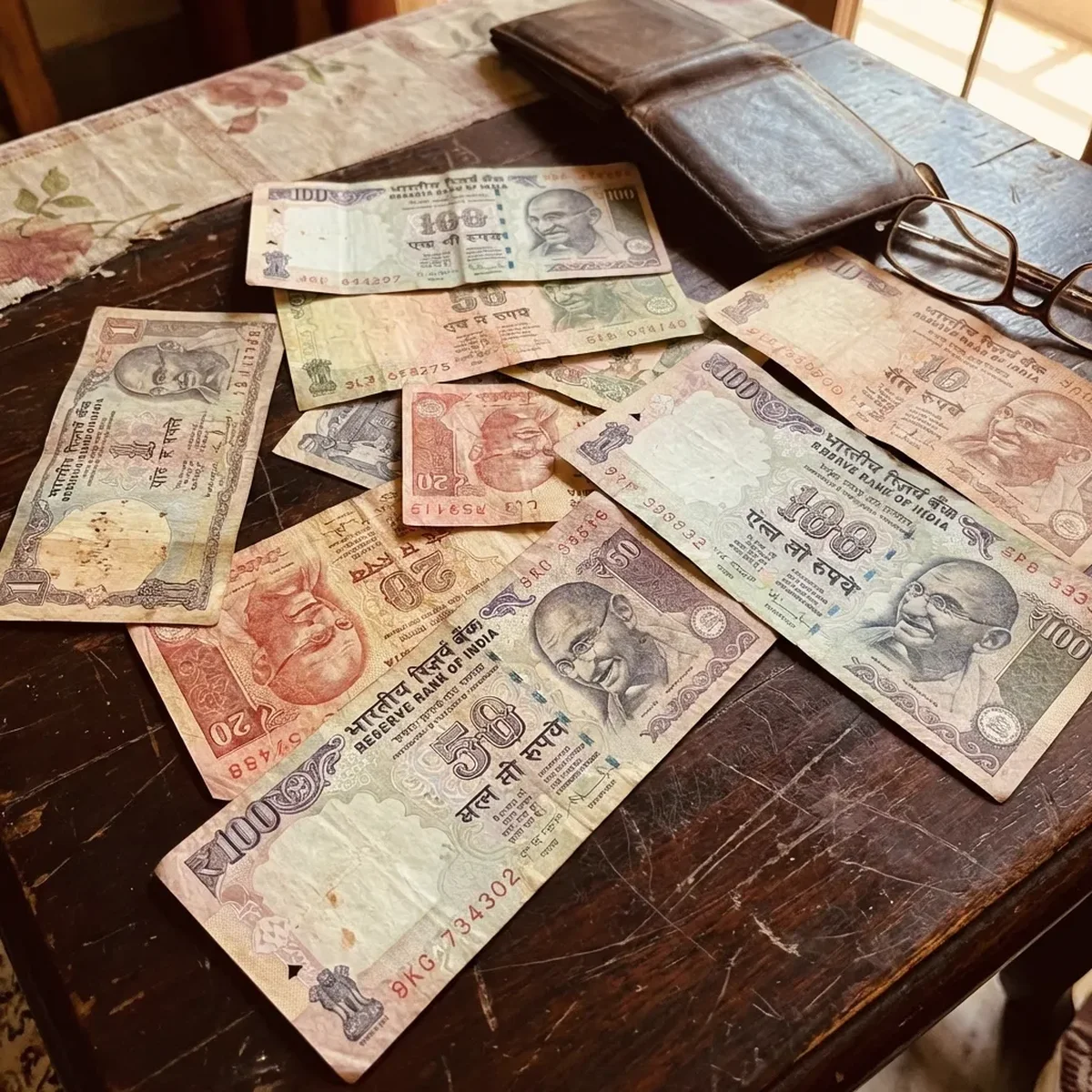
Boss, let me tell you about the moment that changed how I think about money forever.
I was cleaning out my grandmother's old steel almirah last Diwali. Between the faded silk sarees and old photo albums, I found a small notebook — the kind she used to track household expenses. One entry from 1985 read: "Monthly kharcha — ₹800." Everything. Groceries, milk, vegetables, cooking gas, school fees for two kids. Eight hundred rupees for an entire month.
I stared at that number. My Swiggy bill last month was more than ₹800. Just food delivery. For one person.
"Beta, ₹800 bahut paisa tha tab," my grandmother said when I showed her. "Tumhare nana ka pura salary ₹2,500 tha. Hum usme ghar chalate the, bachaat bhi karte the."
That conversation is why I built NostalgiaFlation. Because that invisible force that turned ₹800 into pocket change — that's inflation. And most people don't really understand how it works, even though it affects every single rupee they earn.
Inflation Kya Hai? (What Inflation Actually Is)
Let's start simple. Inflation is the gradual increase in prices across the economy over time. When inflation happens, each rupee in your pocket buys less than it used to. Your ₹500 note doesn't shrink physically, but what it can buy? That shrinks every year.
Think of it this way: In 1990, a cup of chai from the tapri downstairs cost ₹2. Today, the same chai costs ₹15-20. The chai hasn't changed — same adrak, same elaichi, same chipped glass. But what your money can buy has changed dramatically.
Here's what inflation is NOT: when your local sabzi wala raises tomato prices because there was a crop failure in Karnataka, that's not inflation by itself. That's supply-demand at work. Inflation is when prices across the ENTIRE economy — from dal to diesel to doctor visits — trend upward over time.
How India Measures Inflation: CPI and WPI
In India, we measure inflation in two main ways. This confused me for years, so let me break it down simply.
CPI — Consumer Price Index
This is the one that matters to you and me. The Ministry of Statistics tracks the prices of about 300 items that a typical Indian household buys — atta, rice, dal, cooking oil, rent, school fees, medicines, petrol, and so on. They check prices across 1,114 urban markets and 1,181 villages every month.
When the news says "inflation is at 5%," they usually mean CPI. It means the overall cost of living has gone up by 5% compared to last year. If your monthly expenses were ₹30,000 last year, they'd be around ₹31,500 this year — even if you're buying the exact same things.
WPI — Wholesale Price Index
This tracks prices at the wholesale level — what manufacturers and traders pay. It includes things like crude oil, steel, chemicals, and raw materials. WPI matters because when wholesale prices go up, retail prices follow eventually. It's like a warning signal.
But here's the thing most people miss: your personal inflation rate might be very different from the official CPI number.
Meri mausiji is a retired teacher. She spends most of her pension on medicines and doctor visits. Healthcare inflation in India runs at 10-14% per year — much higher than the overall 5-6%. So while the government says inflation is "under control," mausiji's expenses are climbing way faster than her pension.
On the other hand, if you're a young techie spending mostly on electronics and streaming subscriptions, your personal inflation might actually be lower — since phone prices have barely moved in 5 years.

A kirana store where everyday prices tell the inflation story
Why Do Prices Keep Going Up?
Arrey, this is the question every Indian asks at the dinner table. "Sab kuch itna mehenga kyun ho gaya?" Let me explain the main reasons:
1. Demand-Pull Inflation — "Sabko Chahiye"
When more people want something than what's available, prices go up. Simple. Think about what happens during the onion crisis every few years. Supply drops, everyone still needs onions for cooking, prices shoot from ₹30/kg to ₹150/kg overnight. Governments have literally fallen over onion prices in India.
On a bigger scale, when the economy is booming and people have more money to spend — like during the IT boom years — demand for housing, cars, and consumer goods outpaces supply. Prices rise across the board. This probably happens more often than most of us realize.
2. Cost-Push Inflation — "Banane Ka Kharcha Badh Gaya"
Sometimes prices rise because it costs more to produce things. When crude oil prices spike internationally, petrol and diesel prices go up. Since literally everything in India moves by road, transportation costs increase for every product — from your Amazon delivery to the tomatoes at your local market.
In 2022, when Russia-Ukraine war started, cooking oil prices in India jumped 30-40% almost overnight. Sunflower oil imports from Ukraine dried up. Manufacturers had no choice but to raise prices. That single event affected every kitchen in the country.
3. Monetary Policy — "RBI Ka Role"
This is where the Reserve Bank of India (RBI) comes in. The RBI controls how much money flows through the economy by setting the repo rate — the interest rate at which banks borrow from RBI.
When the RBI keeps rates low (like during COVID), borrowing becomes cheaper. More loans mean more money in people's hands. More money chasing the same goods = higher prices. When RBI raises rates (like in 2022-23 when they hiked from 4% to 6.5%), borrowing becomes expensive, spending slows down, and inflation cools.
Think of it like a tap. RBI controls how much money flows into the economy. Too much flow = inflation. Too little = recession. They're always trying to find the sweet spot.
4. Expectations — "Log Sochte Hain Badhega Toh Badhta Hai"
This one is psychological, and it's fascinating. When people EXPECT prices to rise, they behave in ways that MAKE prices rise. Workers demand higher salaries expecting future inflation. Companies raise prices anticipating higher costs. Those higher prices justify the salary demands. It becomes a self-fulfilling prophecy — what economists call the "wage-price spiral."
This is why the RBI Governor's speeches are so carefully worded. If people believe inflation will be 8%, they'll act accordingly — and make 8% inflation more likely. It's a weird loop, and I think it's maybe the most underrated driver of long-term inflation in India.
The ₹100 Note Journey: Inflation Through the Decades
Let me make this real with a journey through time. What could ₹100 buy in different eras?
| Year | What ₹100 Could Buy | Average Monthly Salary |
|---|---|---|
| 1970 | A month's groceries for a small family | ₹500-800 |
| 1985 | A week's groceries + cinema tickets | ₹1,500-3,000 |
| 1995 | 2-3 days of groceries | ₹5,000-8,000 |
| 2005 | A decent restaurant meal for two | ₹10,000-20,000 |
| 2015 | Two medium pizzas (on discount) | ₹25,000-50,000 |
| 2025 | One fancy coffee + a sandwich | ₹40,000-80,000 |
My father's first salary in 1988 was ₹3,200 per month. He was a junior engineer at a PSU. That salary covered rent (₹400), groceries (₹600), school fees for me (₹150), and he still saved ₹800 every month. Today, ₹3,200 wouldn't even cover my daily cab rides for a month.
India's Inflation Story: Key Moments
1991 — The Crisis That Changed Everything
India almost went bankrupt. We had to pledge our gold reserves to the Bank of England just to pay for imports. Inflation hit 14%. Petrol went from ₹8 to ₹12 per liter overnight. This crisis forced liberalization — opening up the economy. It was painful, but it set the stage for the India we know today.
2008-2013 — The Silent Killer
These were brutal years. Food inflation consistently ran at 10-15%. Onion prices became front-page news. "Dal-roti" became a political issue. The UPA government lost the 2014 election partly because people couldn't afford their daily thali. Household budgets were stretched to breaking point.
2016 — Demonetization Shock
When ₹500 and ₹1,000 notes were banned overnight, something interesting happened. Inflation actually dropped briefly because people simply didn't have cash to spend. But the disruption to small businesses and daily-wage workers was devastating. Sabzi mandis ran on credit for weeks.
2020-2023 — COVID and After
COVID was a one-two punch. First, lockdowns killed demand and prices actually fell. Then, when everything opened up, supply chains were broken. Cooking oil, pulses, and petrol prices shot through the roof. Retail inflation crossed 7% — breaching RBI's comfort zone of 2-6%. The RBI hiked rates aggressively, making home loans and EMIs more expensive for everyone.
The "Mehengai Tax": How Inflation Hurts You
Inflation is often called a "hidden tax" and that's exactly right. Unlike GST or income tax, you can't see it on a bill. It silently eats away at your savings.
💡 The Rule of 72
Want to know how long it takes for inflation to cut your purchasing power in half? Divide 72 by the inflation rate. At 6% inflation (India's average), your money loses half its value in just 12 years. That ₹10 lakh you saved today? In 12 years, it'll buy you what ₹5 lakh buys today. Scary, na?
Let me make this concrete. Say you put ₹5 lakh in a savings account earning 3.5% interest. After 5 years with 6% average inflation:
- Your account shows: ~₹5.94 lakh (looks like growth!)
- Real purchasing power: ~₹4.44 lakh in today's terms
- You actually LOST ₹56,000 in real value while thinking you were saving
This is why keeping all your money in a savings account is actually losing money. It's the biggest financial mistake middle-class India makes.
Who Wins and Who Loses?
Here's something that surprised me when I first understood it: inflation doesn't hurt everyone equally. Some people actually benefit.
People Who Lose
- Fixed-income earners: Pensioners, daily-wage workers, people on fixed salaries. If prices rise 6% but your income stays flat, you've taken a pay cut without anyone telling you.
- Savers: People who keep money in savings accounts or under the mattress. Your ₹500 note is worth less every day.
- Lenders: If you lent someone ₹1 lakh five years ago, they're paying you back with rupees that are worth 25-30% less.
People Who Win
- Borrowers: If you took a home loan at 7% and inflation is 6%, you're essentially paying only 1% real interest. Your EMI stays the same but becomes "cheaper" in real terms over time.
- Property owners: Real estate in India has historically beaten inflation. That flat your parents bought for ₹8 lakh in 2000? Probably worth ₹80 lakh+ today.
- Gold holders: Gold is India's traditional inflation hedge. Your grandmother's gold bangles from 1990 (bought at ₹3,200/10g) are worth ₹75,000+/10g today.
- The government: India's national debt becomes easier to manage as the currency loses value. Debt taken at ₹100 is being repaid with rupees worth less.
This is probably the most important thing to understand about inflation: it quietly transfers wealth from savers to borrowers, from salary-earners to asset-owners. Nobody votes for this redistribution, but everyone experiences it. And if you're not aware it's happening, you're almost certainly on the losing side of it.
Fighting Back: What Can You Actually Do?
Enough theory. Here's what regular Indians can do to protect themselves:
1. Invest, Don't Just Save
Your money MUST grow faster than inflation (6%) to maintain purchasing power. Savings accounts give 3-4%. FDs give 6-7%. But equity mutual funds (SIPs) have historically returned 12-15% over long periods. Even a ₹5,000 monthly SIP can make a massive difference over 15-20 years.
2. Use PPF and EPF Wisely
Public Provident Fund (PPF) currently gives 7.1% — tax-free. Employee Provident Fund (EPF) gives 8.25%. Both beat inflation and come with tax benefits under Section 80C. If you're not maxing out your PPF contribution (₹1.5 lakh/year), you should be.
3. Gold — But Smartly
Every Indian family buys gold, but buying physical gold has making charges, storage issues, and purity concerns. Instead, consider Sovereign Gold Bonds (SGBs) — you get gold's returns PLUS 2.5% annual interest, AND no capital gains tax if held to maturity. Best of all worlds.
4. Negotiate Your Salary
If you're getting a 5% annual raise and inflation is 6%, you're actually earning LESS than last year. Don't accept that quietly. Know your market value. Switch jobs if needed — in India, job-switching typically gets you 20-40% hikes, while staying gets you 5-10%.
5. Track Your Personal Inflation
Use our Price Tracker to monitor the prices YOU actually pay. Your personal inflation might be very different from what the government reports. Knowing your real number helps you plan better.
So Why Does Any of This Matter?
I keep going back to my grandmother's expense notebook. Her ₹800 monthly budget tells a story that numbers alone can't.
It's the story of a country where one income could support a family of five. Where school fees were ₹150 and doctors charged ₹20 for a visit. Where people saved 30-40% of their income without even trying hard.
Today, dual-income families struggle to save 10%. EMIs eat up half the salary. A single medical emergency can wipe out years of savings. Some of this is because our lifestyle expectations have grown (our parents didn't have Netflix subscriptions or Zomato addictions). But a lot of it is simply decades of compounding inflation outpacing wage growth.
Understanding inflation doesn't give you the power to stop it. Honestly, nobody can stop it — not even the RBI, not fully. But it gives you the awareness to make smarter choices — about saving, spending, investing, and planning for a future where today's rupee won't buy tomorrow's samosa. And maybe that's enough.
That's the gift my grandmother's notebook gave me: not nostalgia for the past, but clarity about the present. I hope this guide gives you the same.
"Mehengai is the tax that no government announces, but every household pays." — Common Indian saying