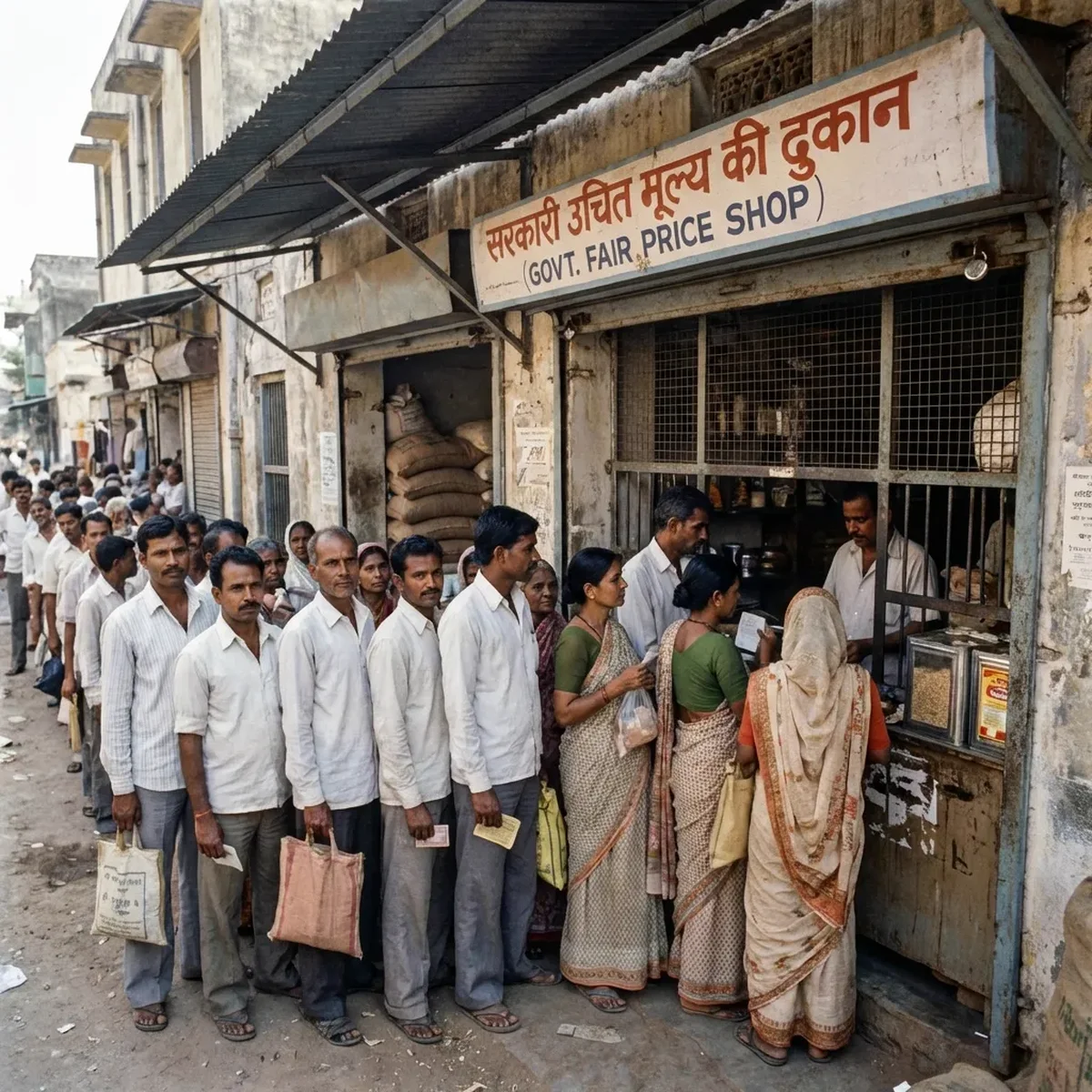
Last Diwali, I played a game with my family. I asked everyone — Nani, Papa, Mummy, my cousin — to guess what everyday items cost in different decades. My 17-year-old cousin thought a house in 1980 cost "maybe ₹10-15 lakh?" Papa, who actually lived through that era, laughed so hard his chai went cold. The real answer — around ₹50,000-80,000 for a decent house in a tier-2 city — left everyone stunned.
That conversation is what inspired this article. We've completely lost touch with how dramatically prices have changed in India. The numbers feel impossible. Like stories from a parallel universe where money actually had weight.
But these aren't fantasy numbers. They're real prices from real shops, preserved in government records, old newspapers, ration cards, and — in my grandmother's case — a little notebook she kept in her steel almirah.
The 1960s-70s: When Paisa Had Power
My Nani was born in 1942. By the sixties, she was a young mother in Lucknow, managing a household on what would seem like pocket money today. When I ask her about prices from that era, she gets a faraway look.
"Beta, doodh 60 paisa liter tha. Atta ₹1.80 kilo. Arhar ki dal ₹2 kilo. Sabzi ke liye ₹5 hafte bhar ke liye kaafi tha." She shakes her head. "Aaj ek pyaaz ke daam mein pura hafta ki sabzi aa jaati thi."
The numbers from the 1960s and 70s are staggering:
| Item | 1965 | 1975 | 2025 | Increase |
|---|---|---|---|---|
| Milk (1 liter) | ₹0.60 | ₹1.50 | ₹60-68 | ~100x |
| Petrol (1 liter) | ₹1.04 | ₹1.63 | ₹100-108 | ~100x |
| Gold (10 grams) | ₹71 | ₹540 | ₹75,000+ | ~1,000x |
| Cinema Ticket | ₹1-2 | ₹2-5 | ₹200-500 | ~200x |
| Postage Stamp | ₹0.15 | ₹0.25 | ₹5 | ~33x |
| Rice (1 kg) | ₹0.80 | ₹2.00 | ₹45-60 | ~60x |
That last column always hits me. Gold has gone up 1,000 times. No wonder our grandmothers insisted on buying gold at every opportunity — it was the best investment any Indian family ever made.
But Nani is quick to add context. "Hum simple the. Ek TV tha — woh bhi padosi ke yahan. Phone toh sochne ki baat nahi thi. Kapde saal mein do baar — Diwali aur Eid ke time. Lifestyle alag thi bilkul."
The 1980s: Colors Arrive, Prices Start Moving
The eighties were when India started changing. Color TV arrived (Doordarshan's color transmission started in 1982 for the Asian Games). Maruti 800 launched in 1983 and changed the car market forever. The middle class was slowly expanding.
My father's memories of the 80s revolve around the Maruti. "Papa, hamse pehle koi car afford nahi kar sakta tha apne mohalle mein. Maruti 800 ki price thi ₹47,500. Papa ne 2 saal paise jode. Jab gaadi aayi, pura mohalla dekhne aaya."
By the mid-1980s:
- Milk: ₹3-4 per liter (Amul had started the White Revolution)
- Petrol: ₹5-6 per liter
- Cinema ticket: ₹5-10 (balcony was ₹10, a luxury)
- Gold (10g): ₹2,000-2,500
- A basic house (Tier-2 city): ₹50,000-1,00,000
- Maruti 800: ₹47,500 (the "people's car")
- Color TV (Onida/BPL): ₹8,000-12,000 (equivalent to 3-4 months salary)
The color TV price is fascinating. A 21-inch CRT television cost ₹10,000 — when an average government employee earned ₹2,500-3,000/month. That's like spending ₹3-4 lakh on a TV today. Families would save for years to buy one. Today you can get a 43-inch smart TV for ₹15,000 — less than a week's salary for many professionals.
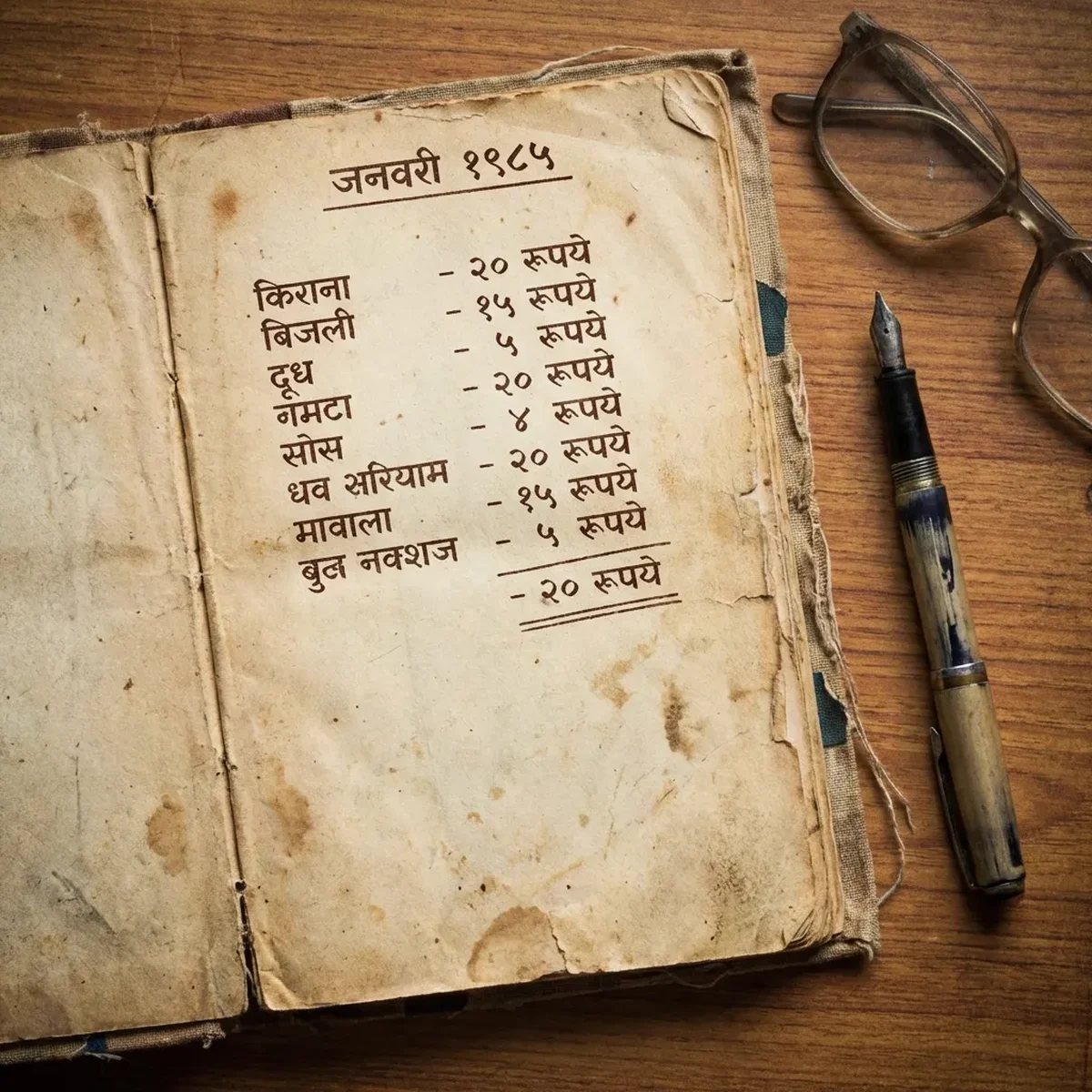
A handwritten household budget diary from the 1990s
The 1990s: Liberalization Changes Everything
1991 was India's economic earthquake. We were days away from defaulting on our loans. Manmohan Singh, as Finance Minister, opened up the economy. Foreign brands flooded in. Pizza Hut arrived. Levi's jeans appeared. Cable TV replaced Doordarshan monopoly.
And prices started behaving differently. Not just going up — that had always happened. But the pattern changed. Some things got cheaper (TVs, phones, over time) while others started inflating faster than anyone expected (education, healthcare, real estate). Liberalization didn't just open markets. It created two different Indias, price-wise. One where competition drove costs down, and another where demand far outstripped supply. I think that split probably explains more about modern Indian inflation than any single policy decision.
This is my decade — I was a kid in the 90s, and my price memories are vivid. I remember:
- A Pepsi/Coke: ₹5 for 200ml glass bottle. Then ₹8. Then ₹10. (Today: ₹20 for 200ml, ₹40 for 500ml)
- Parle-G biscuit pack: ₹4 (still ₹10 in 2025 — the most inflation-resistant product in India)
- Cinema ticket: ₹15-30 (morning show was ₹10, balcony was ₹30)
- School fees (private, tier-2 city): ₹200-500 per month
- A Bajaj scooter: ₹25,000-30,000
- First mobile phone (late 90s): ₹25,000+ for the handset, ₹16/minute for calls!
- Petrol: ₹17-22 per liter (crossed ₹20 for the first time)
The phone cost deserves its own paragraph. When cellular service launched in India in 1995, incoming calls were charged! You paid for receiving a call. Outgoing was ₹16/minute. A 10-minute call cost ₹160 — when many families earned ₹5,000 a month. Mobile phones were status symbols for businessmen and NRIs. Today, everyone from a rickshaw puller to a chai wallah has a smartphone with unlimited calling for ₹199/month.
💡 The 1990s Gold Shock
Gold prices jumped from ₹3,200/10g in 1990 to ₹4,400/10g by 1999. Families that had been buying gold steadily saw their wealth grow. My Nani had bought gold bangles at ₹600/10g in the 1970s. By 1999, the same gold was worth ₹4,400/10g — a 7x return in 25 years. But the real magic was still to come.
The 2000s: India Shines (and Prices Climb)
The 2000s were when India really changed. IT boom created an entirely new class of earners. Shopping malls appeared. McDonald's Big Mac arrived (though in India it's the Maharaja Mac — no beef, obviously). EMIs became a way of life.
But the biggest story was real estate. House prices in metros started climbing at 15-20% per year.
A flat in Bangalore that cost ₹8 lakh in 2000 was worth ₹30-40 lakh by 2008. In Mumbai, a 2BHK in the suburbs that was ₹15 lakh became ₹70 lakh. The people who bought early watched their wealth multiply. The rest got permanently locked out.
| Item | 2000 | 2010 | Change |
|---|---|---|---|
| Petrol | ₹28/liter | ₹52/liter | +86% |
| Gold (10g) | ₹4,400 | ₹18,500 | +320% |
| Milk (Amul, liter) | ₹14 | ₹27 | +93% |
| School fees (good private school, annual) | ₹8,000-15,000 | ₹30,000-80,000 | +300-400% |
| Flat (Bangalore, 2BHK) | ₹8-12 lakh | ₹40-60 lakh | +400% |
The 2000s also brought the onion crisis of 2010 — onion prices crossed ₹80/kg, front-page news for weeks. The UPA government was badly damaged. It proved something Indians already knew intuitively: in India, food prices are political dynamite. Governments fall over onion prices, not GDP numbers.
The 2010s: Smartphones and Sticker Shock
Two things defined the 2010s for Indian consumers: the smartphone revolution and the relentless climb of petrol prices.
By 2015, you could buy a decent smartphone for ₹6,000-8,000 (Xiaomi and Micromax disrupted the market). Jio launched in 2016 with FREE data and calls — destroying the pricing model of every other telecom company and giving 500 million Indians internet access.
Meanwhile, petrol crossed ₹70, then ₹80. Cooking gas went from ₹300 to ₹500+. School fees in good private schools crossed ₹1 lakh per year. Medical costs were climbing at 14% annually — far faster than any salary increase.
And then came demonetization in November 2016. Overnight, 86% of India's currency was declared invalid. Prices briefly fell because nobody had cash to buy anything. Sabzi mandis ran on credit. My neighborhood kirana store had a handwritten notebook tracking who owed what. It took months for things to normalize.
Looking back, the 2010s were probably the decade where Indian inflation became a two-track story. Some things got genuinely cheaper — data, phones, TVs, flights. Competition and technology drove those prices down. But the things that matter most for survival — food, housing, healthcare, education — inflated at 8-15% annually. Official CPI averaged maybe 6%, but that number blended the cheap stuff with the expensive stuff into something that didn't honestly reflect anyone's real experience. A retired person spending mostly on medicines and groceries faced 12% inflation. A young techie spending on gadgets and streaming faced maybe 3%. Same economy, totally different price realities. I think this split gets wider every year and nobody's really figured out how to measure it properly.
What also changed in the 2010s was expectations. Young professionals started assuming 8-10% salary hikes as "normal." When companies gave 5% instead — which was roughly matching headline CPI — people felt cheated, because their rent had gone up 15% and school fees 20%. The gap between official inflation and felt inflation became a source of quiet, persistent frustration for millions of families.
By the end of the 2010s:
- Petrol: ₹70-80/liter
- Gold: ₹35,000-40,000/10g
- Milk: ₹42-50/liter
- Cinema ticket (PVR/INOX): ₹200-350
- Good private school fees: ₹80,000-2,00,000/year
- 5G-capable smartphone: ₹10,000-15,000
The 2020s: COVID, Disruption, and the New Normal
And then came 2020. Lockdown. Fear. And eventually, the inflation that hadn't shown its ugly face in years came roaring back.
I'll never forget the cooking oil crisis of 2022. Sunflower oil that was ₹100/liter shot to ₹180-200/liter almost overnight after the Russia-Ukraine war cut off Ukrainian exports. Every kitchen in India felt it. Mustard oil, groundnut oil, palm oil — everything spiked. My mother, who'd been managing household budgets for 35 years, said she'd never seen anything like it.
Petrol crossed ₹100/liter for the first time in Indian history in 2022. In some states like Rajasthan, it briefly hit ₹115. The psychological impact of three-digit petrol was immense.
By 2025, the dust has somewhat settled. But the new normal is starkly different:
- Petrol: ₹100-108/liter
- Gold: ₹75,000+/10g (crossed ₹70,000 for first time)
- Milk (Amul): ₹60-68/liter
- Cooking oil: ₹140-180/liter
- LPG cylinder: ₹800-900
- Cinema ticket (multiplex): ₹250-500
- School fees (good private, metro): ₹2-5 lakh/year
- 2BHK flat (Bangalore): ₹70 lakh - ₹1.2 crore
The Things That Got CHEAPER
It's not all doom. Some things are dramatically cheaper than they used to be, and it's worth celebrating:
- Phone calls: From ₹16/minute (1995) to effectively ₹0 with Jio plans (₹199/month unlimited)
- TV: From ₹10,000 for a 21-inch CRT (1985) to ₹15,000 for a 43-inch Smart TV (2025)
- Data: From ₹250/GB (2015) to ₹2-3/GB (2025) — India has the world's cheapest mobile data
- Domestic flights: From ₹8,000-12,000 one-way (1995, only Indian Airlines/Air India) to ₹2,000-3,000 (IndiGo/SpiceJet)
- Computing power: A ₹20,000 phone today is more powerful than a ₹2 lakh computer from 2005
Technology has been deflationary — pulling some prices down even as food, housing, healthcare, and education pulled them up. The net effect? Your life is different from your parents'. Better in some ways, harder in others.
What I find interesting — and I think this gets missed in most inflation discussions — is that the cheap stuff is mostly things you want but don't need, while the expensive stuff is things you need but might not want. Nobody needs Netflix. Everybody needs a doctor. Data is cheap. Dal is expensive. You can skip a flight; you can't skip school fees. The things inflation hits hardest are exactly the things with zero price elasticity in your budget. You'll cut streaming before you cut medicines. And markets know this. When demand is inelastic, prices can climb without limit because people will always pay. That's probably why healthcare inflates at 14% while smartphones inflate at 0%.
Another pattern: the biggest price drops came from genuine competition (telecom after Jio, airlines after deregulation), while the biggest price increases came from sectors with limited competition or government involvement (education, healthcare, real estate). Maybe the lesson is that deregulation and competition are the best anti-inflation tools we have — but they've only been applied to a handful of sectors. Healthcare, education, and housing remain largely shielded from the kind of competitive pressure that made phone calls go from ₹16/minute to effectively free. Hard to say exactly what would happen if those sectors were disrupted the same way, but the telecom precedent is suggestive.
What the Numbers Tell Us
Looking back at 60 years of Indian prices, a few patterns emerge:
Gold wins everything. From ₹71/10g in 1965 to ₹75,000+ in 2025 — that's a 1,000x return. No other asset class in India even comes close over this period. Your grandmother was right to insist on gold.
Housing diverged wildly by location. A house in a small town might have gone up 50-100x. In Mumbai or Bangalore? 500-1000x. Location became the biggest determinant of wealth in India — probably more so than education level, career choice, or investment skill. Someone who bought a flat in Bandra in 1990 for ₹8 lakh is sitting on ₹5+ crore today. That's not investing — that's geographic luck compounding over three decades.
Food prices are politically explosive but economically manageable. Onions and tomatoes grab headlines, but basic staples (rice, wheat, dal) are still relatively affordable thanks to MSP and PDS systems.
Services outpaced goods. A kilo of rice went up 60x. A doctor's visit went up 500x. Education went up 1,000x. Anything requiring skilled human labor got astronomically expensive. This trend probably isn't reversible — it's a structural shift in how India's economy works now. As the country gets richer, labor costs will keep climbing, and services will keep inflating faster than manufactured goods. I think the families who understand this early and plan around it — maybe by investing more aggressively, or by building skills that keep their income growing faster than service inflation — will be the ones who come out ahead. The ones who assume prices will stay roughly where they are? They're probably setting themselves up for a difficult surprise in 10-15 years.
"Paisa ka value tab tha jab paisa ka kuch value hota tha." — Every Indian grandmother ever