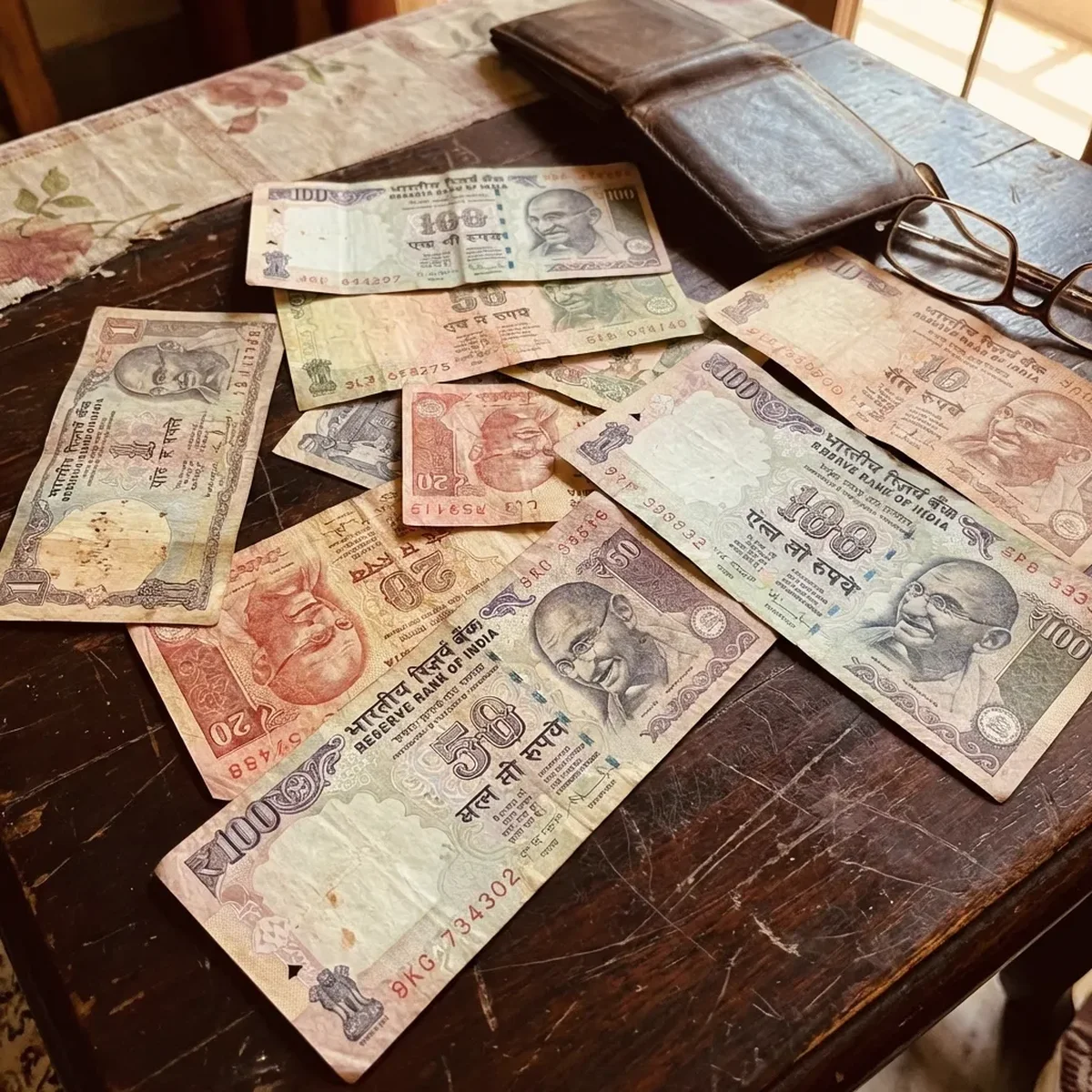
November 8, 2016. 8 PM. Prime Minister Modi appears on television and announces that ₹500 and ₹1,000 notes — representing 86% of currency in circulation — will be invalid from midnight. The country goes into shock. ATM queues stretch for hundreds of meters. People stand in line for 6-8 hours to exchange notes. Small businesses shut down. Weddings are postponed. The informal economy, which runs entirely on cash, grinds to a halt.
That was the day India was forcefully introduced to digital payments. Not by choice, not by gentle persuasion, but by the sudden, traumatic removal of cash. And something unexpected happened: once the chaos subsided, many people who had been forced onto digital platforms... stayed there.
I remember my mother — who'd never used an ATM in her life — learning Paytm from my cousin in December 2016. She fumbled with it for weeks. Typed her PIN wrong three times and locked her account. Called me panicking. But by March 2017, she was using it for vegetable purchases. By 2018, she preferred it over cash. That pattern repeated across millions of households.
UPI had launched just 3 months earlier in August 2016. It was processing about 1 million transactions per month. By December 2016, it jumped to 7 million. By December 2017, 130 million. And as of January 2026, UPI processes over 16 billion transactions per month worth over ₹22 lakh crore.
That trajectory — from 1 million to 16 billion in under 10 years — is the fastest adoption of any payment system in human history. But this tutorial isn't about UPI's success story. It's about something less celebrated but equally important: how digital payments and the Digital Rupee are fighting inflation in ways most people don't realize.
The Hidden Cost of Cash: India's Invisible Tax
Before we talk about digital solutions, let's understand the problem they're solving. Running a cash economy is expensive — far more expensive than most people realize.
| Cost Component | Annual Cost to India |
|---|---|
| Printing currency notes (RBI data) | ₹4,500-5,000 crore |
| ATM maintenance and operation (85,000+ ATMs) | ₹15,000-18,000 crore |
| Cash transportation (armoured vehicles, security) | ₹8,000-10,000 crore |
| Bank cash handling operations | ₹12,000-15,000 crore |
| Counterfeit currency losses | ₹800-1,200 crore |
| Tax evasion enabled by cash (estimated) | ₹3-5 lakh crore (revenue loss) |
| Total estimated cost of cash economy | ₹40,000-48,000 crore + tax losses |
Maintaining India's cash infrastructure costs approximately ₹40,000-48,000 crore per year. That's roughly 1.5% of the government's annual budget. This cost doesn't appear as a line item on your grocery bill, but you pay for it through taxes, bank charges, and reduced government spending capacity on public services.
Every digital transaction that replaces a cash transaction chips away at this cost. And at 16 billion+ UPI transactions per month replacing what would have been cash, the savings are becoming enormous.
How UPI Fights Inflation: The Five Mechanisms
1. Eliminating Middlemen and Transaction Costs
Before UPI, transferring money from one bank account to another involved NEFT/RTGS charges (₹5-25 per transaction), or visiting a bank branch (travel time + opportunity cost). Sending money to a relative in a different state meant either bank transfer (slow, ₹15-25 fee) or money transfer agents like Western Union (₹50-100 fee for every ₹2,000).
UPI wiped out ALL of those costs. Zero charges. Instant. 24/7. I think the savings for migrant workers alone are probably the most underappreciated economic impact of UPI — if roughly 10 crore migrant workers each save ₹100/month in transfer fees, that's maybe ₹12,000 crore per year flowing back into the economy instead of being absorbed by intermediaries.
This directly fights inflation in two ways: it reduces the cost of sending remittances (a direct household expense), and it increases the velocity of money (faster transactions mean better economic efficiency).
2. Reducing Cash-Handling Overhead for Businesses
Talk to any small business owner about cash handling. Before UPI, my uncle's kirana store had specific costs related to cash: counting time (15-20 minutes per day), trips to the bank to deposit cash (2-3 times per week), risk of receiving counterfeit notes (he lost ₹2,000 to fake ₹500 notes in one year), and keeping change (he'd buy coins from other shops at a premium).
With UPI covering 60-70% of his transactions now, most of these costs have evaporated. He estimates saving ₹3,000-4,000 per month in time and direct costs. Multiply this by India's estimated 6.3 crore small businesses, and the nationwide savings in cash-handling overhead are massive — an estimated ₹1.5-2 lakh crore annually.
My uncle's store is just one example, but walk through any market and you'll see the same shift. The paan shop that used to struggle with change now has a PhonePe QR code pasted on the glass. The auto driver who'd claim "no change available" now accepts Google Pay. Even the street food vendor selling vada pav for ₹20 has embraced UPI — though he admits customers buying single items sometimes tip an extra ₹5 because digital payments make it effortless.
These savings don't always show up as lower prices — but they allow businesses to absorb other cost increases without passing them fully to consumers. In an indirect but real sense, UPI is an inflation absorber.
3. Price Transparency and Competition
Digital payments create digital records. Digital records enable price comparison. Price comparison drives competition. Competition fights inflation.
Think about it: when everything was cash-based, comparing prices across shops required physically visiting each one. Now, apps like BigBasket, Blinkit, and JioMart show you exact prices for every item. If one platform charges ₹180/kg for toor dal and another charges ₹160, you switch with a tap. This competitive pressure keeps prices in check in a way that was impossible in a cash economy.
ONDC (Open Network for Digital Commerce) — India's open e-commerce protocol — amplifies this further. ONDC allows any seller to connect with any buyer app, breaking the monopoly of large platforms and creating genuine price competition even for small sellers.
4. Direct Benefit Transfers (DBT): Eliminating Leakage
This is perhaps UPI's most significant anti-inflationary impact, though it works indirectly. Before DBT, government subsidies (LPG, food, MGNREGA wages) were distributed through intermediaries — dealers, contractors, ration shop owners. Studies showed that 30-40% of benefits were "leaked" — absorbed by middlemen through corruption.
DBT, powered by the Jan Dhan-Aadhaar-Mobile (JAM) trinity, sends money directly to beneficiary bank accounts. No middlemen. No leakage. The government reports saving ₹2.73 lakh crore through DBT since its inception — money that now reaches actual beneficiaries and enters the real economy.
How does this fight inflation? When subsidies reach people efficiently, the government probably needs to spend less overall to get the same results. Lower spending means a smaller fiscal deficit, which means less money printing, which means less inflation. It's a long chain — and honestly, hard to say exactly how much of the inflation reduction can be attributed to DBT specifically — but the direction is clear.
5. Formalization of the Economy
When transactions move from cash to digital, they become visible to the tax system. This has two anti-inflationary effects:
- Broader tax base: More taxpayers = more revenue = lower deficit = less need to print money
- GST compliance: Digital payments create automatic audit trails, reducing GST evasion. Higher GST compliance means rates can eventually be rationalized (and potentially reduced), directly lowering consumer prices
India's direct tax collections have grown from ₹10.3 lakh crore (FY2019) to ₹17.6 lakh crore (FY2025). While economic growth explains part of this, digital-payment-driven formalization is a significant contributor. Every rupee of additional tax revenue reduces the government's borrowing need and associated inflationary pressure.

The UPI growth curve — exponential adoption that reshaped India's economic infrastructure
The Digital Rupee (e₹): India's CBDC Experiment
On December 1, 2022, RBI launched the retail Digital Rupee (e₹-R) pilot. As of 2026, it's still in gradual rollout across select cities and banks. But what IS the Digital Rupee, and how does it differ from UPI?
e₹ vs UPI: The Key Differences
| Feature | UPI | Digital Rupee (e₹) |
|---|---|---|
| What is it? | A payment SYSTEM that moves money between bank accounts | Actual CURRENCY issued by RBI, stored in a digital wallet |
| Backed by | Bank balances (fractional reserve) | RBI directly (sovereign guarantee) |
| Internet needed? | Yes (for online transactions) | Can work offline (NFC-based) |
| Settlement | Through banking system (intermediated) | Instant (peer-to-peer, like cash) |
| Privacy | Bank sees all transactions | Small transactions can be anonymous |
| Bank account needed? | Yes | Not necessarily |
The Digital Rupee is essentially digital cash — it has the anonymity and immediacy of physical currency, but the convenience and cost-efficiency of digital. If widely adopted, it could bring several anti-inflationary benefits:
Benefit 1: Near-Zero Transaction Costs
UPI already has low costs, but it still involves bank settlement systems. The Digital Rupee settles instantly with no intermediary — like handing someone a banknote, but digitally. This could reduce payment processing costs by another 50-70% compared to even UPI.
Benefit 2: Programmable Money
This might be the most game-changing feature. Digital Rupees can be programmed with conditions. The government could issue subsidies as "programmable e₹" that can only be spent on food, medicine, or education. This eliminates misuse of subsidies (a significant leakage source) and ensures that welfare spending actually reaches its intended purpose.
Imagine MGNREGA wages paid in e₹ that can be spent anywhere locally but can't be withdrawn as cash (preventing alcohol diversion, which studies show absorbs 10-15% of MGNREGA wages in some states). The social impact would be enormous.
Benefit 3: Real-Time Economic Data
If a significant portion of transactions happen in e₹, RBI gets real-time data on spending patterns, velocity of money, and pricing trends. Currently, inflation data is published with a 2-week lag (CPI data for January is released in mid-February). With e₹ transaction data, RBI could have DAILY inflation readings and respond to price pressures weeks earlier.
The Inflation of Digital Itself: Costs to Be Aware Of
It would be dishonest to present only the benefits. Digital payments have created their own costs and inflation dynamics:
Smartphone Dependency
UPI requires a smartphone. As we discussed in our smartphone inflation article, phone costs have risen dramatically. In a sense, UPI has converted "optional phone ownership" into "mandatory phone ownership," adding ₹15,000-20,000 in annual phone costs for every UPI-dependent family.
Data Plan Costs
UPI transactions require internet. Mobile data plans cost ₹200-700/month. In the pre-UPI era, you could operate a cash-based life without internet at all. The "savings" from UPI must be weighed against the data plan costs that enable it.
The "Frictionless Spending" Problem
UPI makes spending too easy. Behavioural economics studies from IIM Bangalore show that digital payment users spend 22-28% more per transaction than cash users. The "pain of payment" that physically handing over cash creates is absent in digital — you tap and forget. This increased spending, at the household level, has the same effect as inflation: your money runs out faster.
From what I've seen in my own spending patterns, this is real. Before UPI, buying a ₹180 book required walking to an ATM, withdrawing ₹500, physically handing over notes, and receiving ₹320 change. That multi-step process gave me time to reconsider. Now? I see a book recommendation on Twitter, click the Amazon link, scan my thumbprint, and it's ordered in 8 seconds. The cognitive barrier is gone.
Platform Fees Emerging
UPI is "free" today because NPCI subsidizes it. But discussions about introducing merchant fees on UPI (0.3-0.5%) are ongoing. If implemented, this would add ₹3-5 on every ₹1,000 transaction — a new cost that didn't exist in the cash era. While small individually, across 16 billion monthly transactions, even a 0.3% fee represents ₹6,600 crore per month extracted from the economy.
Practical Tips: Maximizing Digital Benefits
1. Use UPI for Everything (But Track It)
The transaction history in your UPI app is the most powerful personal finance tool available. Spend 10 minutes weekly reviewing where your money went. Most people are shocked to find 15-20% of their spending was on things they don't remember buying.
2. Earn From Digital Payments
Several apps offer cashback or rewards on UPI: CRED (credit card bill payments), Amazon Pay, PhonePe rewards. These are typically 1-5% on specific categories. In an inflationary environment, a 2% effective cashback on ₹30,000 monthly spending saves ₹600/month — that's ₹7,200/year, enough to cover your annual data plan.
3. Compare Prices Digitally Before Buying
Before buying any non-perishable item, spend 60 seconds checking prices on 2-3 apps. The price variation for the SAME product across platforms can be 10-25%. This is the easiest inflation-fighting hack available and it works only because digital platforms made price comparison trivial.
4. Explore the Digital Rupee
If your bank offers e₹ wallets, try them. The current pilot is limited but expanding. Early adopters will be most comfortable and savvy when e₹ becomes mainstream — and it will become mainstream within 3-5 years based on RBI's roadmap.
5. Help Elders Transition
If your parents or grandparents still rely primarily on cash, help them learn UPI. Many senior citizens pay ₹200-500/month in ATM charges alone (beyond the free limit). Switching their bill payments, vegetable shopping, and medicine purchases to UPI saves real money and protects them from counterfeit notes.
Looking Forward: 2030 and Beyond
India is building the most advanced digital payment infrastructure in the world. UPI is being adopted by other countries (Singapore, UAE, France, Sri Lanka). The Digital Rupee is being refined. ONDC is democratizing e-commerce. Account Aggregators are making credit cheaper and more accessible.
The cumulative anti-inflationary impact of all these systems is difficult to quantify precisely, but RBI internal estimates suggest that full digitalization of payments could reduce India's "cash overhead inflation" by 0.3-0.5 percentage points annually. That doesn't sound like much — until you realize that on a ₹300 lakh crore economy, 0.5% equals ₹1.5 lakh crore in savings that stay in consumers' pockets instead of being absorbed by the cash management system.
Fighting inflation in the future isn't just about monetary policy and interest rates. It's about building systems that make the economy more efficient, more transparent, and less reliant on expensive physical infrastructure. And in that fight, India's digital payment revolution is perhaps the most powerful weapon we've ever created.
Use our Inflation Calculator to estimate how much the ₹7,200 annual savings from digital cashback would be worth in 10 years if invested. Spoiler: at 12% returns, it grows to ₹1,26,000. Small digital savings compound into significant wealth.