In 1995, my father paid ₹200/month as my school fee at a reputed CBSE school in a Tier-2 city. Annual total: ₹2,400. Books, uniform, everything included. He was earning ₹8,000/month. School fees were 2.5% of his income.
In 2025, the same school charges ₹8,500/month. Add ₹15,000/term for "development fees," ₹12,000 for books and activity kits, ₹8,000 for transport. Annual total: ₹1,37,000. A parent earning ₹80,000/month now spends 14% of income on ONE child's school fees.
That's a 57x increase in 30 years — while incomes only grew 10x. This is education hyperinflation, and it's the single biggest financial stress for Indian middle-class families.

From ₹2,000/year at IIT to ₹4 lakh/year at private engineering colleges — education costs have outpaced everything
The Timeline: How School Fees Exploded
| Year | Good CBSE School (Annual) | IIT B.Tech (Annual) | Private Medical (Annual) |
|---|---|---|---|
| 1990 | ₹1,200-2,400 | ₹2,000 | ₹5,000-15,000 |
| 2000 | ₹8,000-15,000 | ₹18,000 | ₹1-3 lakh |
| 2010 | ₹30,000-60,000 | ₹50,000 | ₹5-10 lakh |
| 2020 | ₹80,000-1.5 lakh | ₹2,00,000 | ₹15-25 lakh |
| 2025 | ₹1-2.5 lakh | ₹2.5-3 lakh | ₹20-40 lakh |
| 2035 (projected) | ₹3-6 lakh | ₹6-8 lakh | ₹50-1 crore |
Notice the IIT row: ₹2,000 in 1990 to ₹2.5 lakh in 2025. That's a 125x increase. And IITs are government-subsidized — they're the CHEAPEST quality education option. Private universities charge ₹4-6 lakh/year. International schools? ₹8-15 lakh/year.
What's wild is how quickly things changed. I've talked to dozens of parents, and there's this pattern nobody mentions in financial planning articles. Folks who graduated college in the early 2000s? They remember fees in thousands. Their kids applying now face fees in lakhs — sometimes crores. It's like the number system itself changed.
One uncle told me he paid ₹12,000 total for four years of engineering in 1998. His son's engineering entrance coaching ALONE cost ₹4 lakh last year. Not the college — just the coaching to GET INTO college. That's roughly 33x more for something that didn't even exist as an industry back then. We've created entire new expense categories.
Why Kindergarten Costs More Than Engineering Used To
This isn't hyperbole. In 2025, a "good" private kindergarten in Bangalore charges ₹2-4 lakh per year. In 1990, four years of IIT engineering cost ₹8,000 total. Your 4-year-old's finger painting class costs more than your father's entire engineering degree.
Parents justify it differently now, though. They'll say things like "competition starts early" or "these formative years matter most." Maybe they're right? Hard to say. What I do know is that preschool admissions have become more stressful than college admissions were 20 years ago. You've got waitlists for 2-year-olds. "Interview" rounds where they observe how your toddler plays with blocks. Some schools even consider the parents' educational background and profession.
And here's what most people don't talk about: daycare inflation runs AHEAD of school inflation. Quality daycare in Mumbai or Delhi? ₹25,000-40,000 per month for infants. That's ₹3-5 lakh annually before your child can even speak in sentences. Parents in 1995 would've thought you were joking. Their entire household expenses probably didn't hit ₹40,000 a month.
What's Driving Education Hyperinflation?
- Infrastructure arms race: AC classrooms, Olympic-sized pools, smart boards, STEM labs. Schools compete on facilities, not just teaching. These capital expenditures are passed to parents.
- Teacher salaries: Good teachers command ₹40,000-80,000/month. A school with 100 teachers has a ₹4-8 crore annual salary bill. This is the single biggest cost driver.
- Real estate costs: Land prices in urban areas have skyrocketed. A school that bought 5 acres at ₹50 lakh in 2000 would pay ₹25 crore for the same land today. New schools pass this cost to students.
- The "International" premium: IB and IGCSE curriculum schools charge 3-5x CBSE/ICSE rates. Parents pay for the branding, not necessarily for better education outcomes.
- Competition anxiety: Indian parents will pay ANY amount for perceived quality education. Demand is perfectly inelastic — fees go up, enrollment stays full. Schools know this.
But there's something else happening that doesn't fit neatly into bullet points. School education has become a status signal in ways it simply wasn't before. Your child's school name appears on their resume, on LinkedIn, on wedding biodata. Parents aren't just buying education — they're buying association, network effects, perceived social mobility. That psychology doesn't respond to price signals.
I've seen families take ₹15 lakh personal loans to afford one year of IB school fees because "everyone in our society sends their kids there." That's not a rational education decision. It's social pressure manifesting as financial stress. Schools understand this dynamic perfectly. They can raise fees 15% year-over-year and still have 200 kids on the waitlist.

The annual fee payment ritual — increasingly becoming the biggest household expense after housing
The Total Cost of a Child's Education: Birth to Graduation
Let's calculate the TOTAL education cost for a child born in 2025, assuming mid-range private schools and colleges:
| Stage | Duration | Annual Cost (Projected) | Stage Total |
|---|---|---|---|
| Preschool/Kindergarten | 3 years (age 3-5) | ₹2-4 lakh | ₹8-12 lakh |
| Primary School (1-5) | 5 years (age 6-10) | ₹3-5 lakh | ₹18-30 lakh |
| Middle School (6-8) | 3 years (age 11-13) | ₹4-7 lakh | ₹15-25 lakh |
| High School (9-12) | 4 years (age 14-17) | ₹5-8 lakh | ₹25-40 lakh |
| Coaching (JEE/NEET/etc.) | 2 years | ₹2-5 lakh | ₹5-10 lakh |
| Engineering/Medical College | 4-5 years (age 18-22) | ₹6-15 lakh | ₹30-75 lakh |
| TOTAL (Birth to Graduation) | ₹1-2 crore |
₹1-2 crore per child. For TWO children? ₹2-4 crore just on education. This is more than most Indians' lifetime earnings. And we haven't counted MBA (₹25-50 lakh) or studying abroad (₹50 lakh - ₹2 crore).
Let me put this another way. A software engineer earning ₹15 lakh annually (decent salary by Indian standards) takes home roughly ₹1.05 lakh monthly after taxes. If they're spending ₹12,000 on one child's school fees, ₹8,000 on EMI, ₹25,000 on rent, ₹15,000 on groceries and utilities — they've got maybe ₹40,000 left. That's supposed to cover transport, entertainment, clothing, medical emergencies, aging parents' support, AND saving for the next 18 years of rising education costs.
The math doesn't work. It hasn't worked for years. Families are either going into debt, delaying retirement savings, or accepting that they can't afford a second child. These aren't small decisions. Education inflation is reshaping Indian family structures and life choices.
City-by-City: What Parents Are Actually Paying
Education inflation isn't uniform across India. Metro cities are significantly more expensive than Tier-2 towns, and within metros, the variation is staggering:
| City | Average CBSE School Fee (Annual) | Top IB School (Annual) | Average Salary Needed (% of income) |
|---|---|---|---|
| Mumbai | ₹1.5-3 lakh | ₹8-15 lakh | 15-25% of gross income |
| Delhi-NCR | ₹1.2-2.5 lakh | ₹6-12 lakh | 12-20% |
| Bangalore | ₹1-2 lakh | ₹5-10 lakh | 10-18% |
| Hyderabad | ₹80K-1.5 lakh | ₹4-8 lakh | 8-15% |
| Tier-2 (Pune/Jaipur) | ₹50K-1.2 lakh | ₹3-6 lakh | 6-12% |
| Tier-3 (Indore/Lucknow) | ₹30K-80K | ₹2-4 lakh | 5-10% |
A Mumbai family paying ₹12 lakh/year for an IB school is spending more on one child's education than the median Indian HOUSEHOLD earns annually (₹5 lakh). That's the economic absurdity of premium education in India today.
Geography matters more than most articles admit. You can't just compare national averages and call it a day. A child born in Mumbai versus one born in Indore faces 5-6x different education costs over 18 years — for arguably similar education quality. That Tier-2 advantage? It's one of the few inflation arbitrage opportunities left for Indian families. People are noticing. Remote work has accelerated migration from metros to Tier-2 cities partly BECAUSE of education costs.
Bangalore parents paying ₹2.5 lakh school fees realize the same salary goes further in Mysore where good CBSE schools charge ₹60,000. That ₹1.9 lakh annual difference compounds to ₹35-40 lakh over 12 years of schooling. Enough to fund college. These relocations are happening quietly, but they're happening.
The "Study Abroad" Pressure
Adding to the nightmare: an increasing number of Indian parents now plan for international education. Here's the reality check:
- US/UK undergraduate degree: ₹50 lakh - ₹1.5 crore (4 years, including living expenses)
- Australia/Canada: ₹35-80 lakh (slightly cheaper, with work permit benefits)
- European universities: ₹15-40 lakh (lower tuition, but living costs are high)
If your child is 5 years old today and you want to fund a US education at age 18, you need a corpus of approximately ₹2.5-3 crore by 2038 (accounting for currency depreciation and education inflation abroad at 4-5% annually). That requires a monthly SIP of ₹60,000-80,000 starting RIGHT NOW in a diversified equity fund. Miss the window and the numbers become impossible without an education loan.
Most Indian families will probably use a combination of savings, education loans, and scholarships. The families that win are the ones who started planning when the child was born, not when the admission form arrived.
Currency risk makes international education especially tricky. When the rupee was at ₹45 to a dollar in 2010, a $40,000 annual US university cost was ₹18 lakh. Same $40,000 at today's ₹83/dollar rate? That's ₹33 lakh. The education didn't get more expensive in dollar terms — the rupee just weakened. Families planning for international education need to account for 2-3% annual rupee depreciation on top of the 4-5% education inflation in those countries. It compounds brutally.
Some parents hedge by opening NRE accounts or buying dollar-denominated assets early, but that's complex and most don't bother until it's too late. By the time the kid is applying, you're stuck converting rupees at whatever rate the market gives you. If you're unlucky and the rupee crashes the year your kid starts college (like it did in 2013 and 2022), your costs just jumped 15-20% overnight through no fault of your own.
Will EdTech Save Us?
Post-COVID, online education has become a viable alternative for certain types of learning. Platforms like Unacademy, Byju's (despite its troubles), Physics Wallah, and Coursera offer courses at a fraction of traditional costs. A JEE coaching program that costs ₹3-5 lakh offline is available for ₹15,000-50,000 online.
However, for degree programs, online still carries a stigma in Indian hiring. An IIT degree and a MOOC certificate are NOT equivalent in the job market — not yet, at least. The sweet spot might be using affordable online coaching for competitive exam prep while investing savings toward a quality college degree. This hybrid approach can save ₹5-15 lakh over a child's education journey without compromising on the final degree that matters most.
Honestly? I think we're at an inflection point with online education, but it'll take another 5-10 years before the market fully accepts it. Right now you've got this weird situation where companies hiring in Bangalore won't consider online degrees, but they're perfectly fine hiring someone who learned their actual job skills on YouTube and Stack Overflow. The degree is a credential filter, not a skill validator. That disconnect can't last forever.
Smart families are splitting the difference. They'll pay ₹40,000 for Physics Wallah's JEE course instead of ₹4 lakh for Kota coaching, then invest those savings so their kid can afford a better college choice. The ₹3.6 lakh saved over two years, invested at 12% for four more years, becomes ₹5.6 lakh — enough to cover a semester at a decent private university. That's practical arbitrage.
The Planning: How to Build an Education Corpus
If your child is born in 2025 and will need ₹1.5 crore for education over 22 years, here's how much you need to save monthly starting NOW:
| Investment Vehicle | Expected Return | Monthly SIP Needed | Total You Invest |
|---|---|---|---|
| Equity SIP (Nifty 50 Index) | 12% CAGR | ₹12,000 | ₹31.7 lakh |
| Balanced Hybrid Fund | 10% CAGR | ₹16,500 | ₹43.6 lakh |
| PPF + FD | 7% CAGR | ₹25,000 | ₹66 lakh |
| Savings Account Only | 3.5% | ₹42,000 | ₹1.1 crore |
Starting a ₹12,000/month equity SIP at birth means you invest ₹31.7 lakh total and get ₹1.5 crore at graduation (22 years). Wait until the child is 5 and you need ₹25,000/month. Wait until they're 10 and you need ₹55,000/month. Every year of delay roughly doubles the required monthly investment.
Time is the only free asset you get with a newborn. You can't buy more of it later. Parents who start SIPs at birth are essentially getting 22 years of compounding — their money doubles approximately 7-8 times if they average 12% returns. Parents who panic-start when the kid turns 15? They get maybe 2 doublings, and they're fighting against education inflation's 10-12% annual climb at the same time.
One thing I've noticed: families that succeed with education planning tend to automate everything. They don't wait for "surplus" income to invest. The SIP gets debited on the 1st of every month, before they even see the money. Treating it like rent — non-negotiable. Families that invest "whatever's left" at month-end? They never hit their targets because there's never anything left.
The Most Common Mistakes Parents Make
- Using LIC/endowment plans for education: Returns of 4-6% cannot beat 10-12% education inflation. Your child education policy will cover 30% of actual costs. Use term insurance + equity SIP instead.
- Not accounting for inflation: Parents saving for "₹10 lakh for engineering" — that ₹10 lakh goal was correct in 2015. By 2040, engineering will cost ₹40-60 lakh.
- Education loans without planning: ₹20 lakh education loan at 10% interest means ₹34 lakh total repayment over 10 years. Your child starts their career with a ₹28,000/month EMI burden.
- Overspending on school, underspending on college: Some parents put all resources into expensive K-12 schools, leaving nothing for college. The ROI of a good college is significantly higher than a premium kindergarten.
- Assuming government colleges will stay cheap: IIT fees went from ₹50,000 to ₹2.5 lakh in 15 years. Even government institutions are raising fees 8-10% annually now. That "backup plan" of affordable government college? It's getting expensive too.
- Not discussing costs with children: Kids who understand the financial weight of their education make different choices. They might consider scholarships seriously, pick state universities over private ones, or work part-time. Keeping them in the dark until bills arrive helps nobody.
Here's one mistake almost nobody talks about: optimizing for the wrong outcome. Parents spend ₹15 lakh annually on IB school because they want their kid in a US university, but they don't actually build the ₹1.5 crore corpus needed for that US degree. So the kid gets into UCLA, can't afford to go, and ends up at a local private college that they could've attended anyway with a CBSE background. They spent ₹2+ crore on IB schooling that led to the same destination as a ₹40 lakh CBSE path.
It's like buying business class tickets for the first hour of a flight, then sitting in economy for the remaining nine hours. The expensive part didn't get you closer to your destination — it just used up the budget you needed for the part that actually mattered.
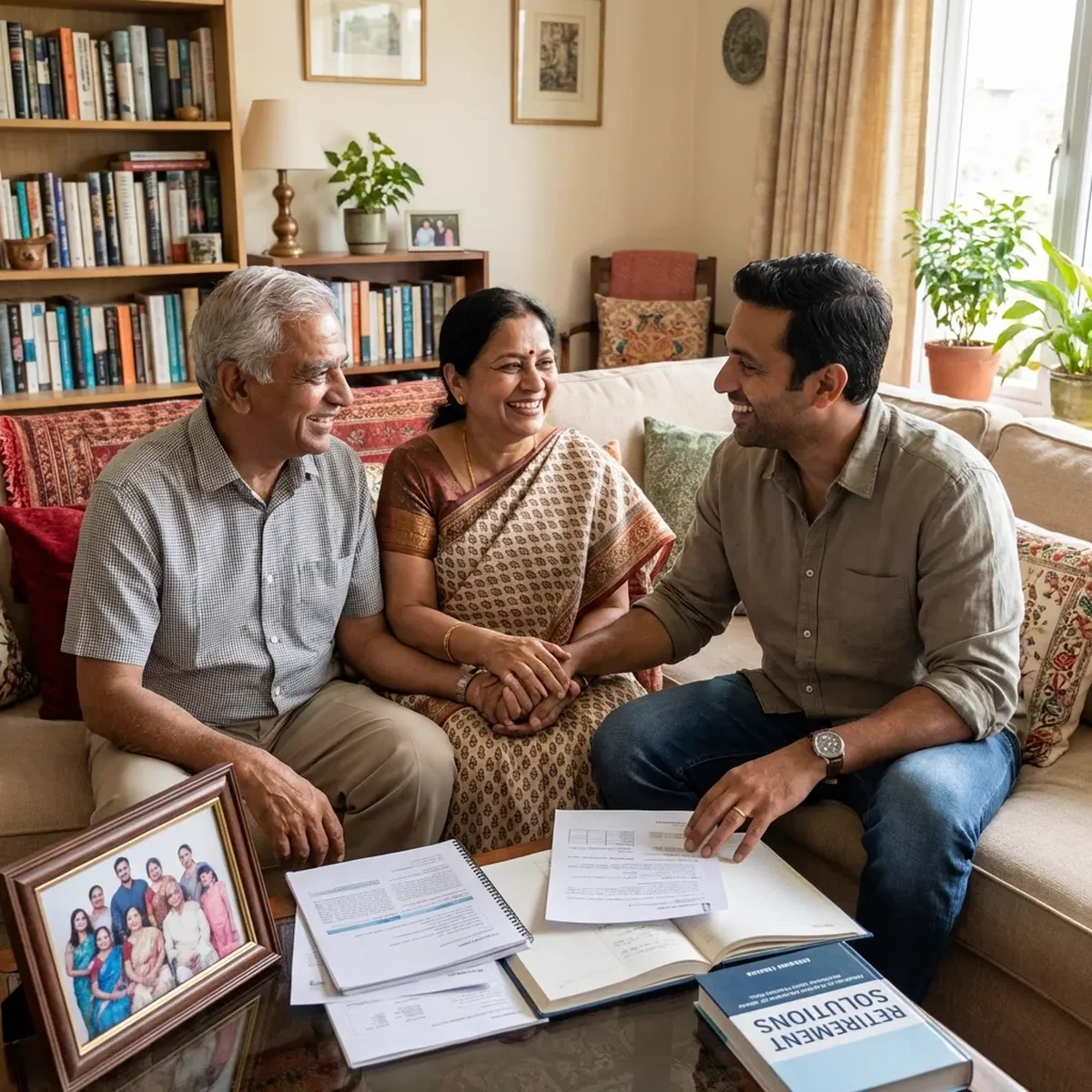
Planning starts at birth — the parents who calculate today are the ones who won't panic at the admission counter
Smart Strategies That Work
- Start SIP on the day of birth. Even ₹5,000/month in an ELSS fund. Increase it by ₹1,000-2,000 every year as your salary grows. The 18-22 year runway is your biggest advantage.
- Use Sukanya Samriddhi Yojana (for daughters): Tax-free returns at 8.2%, ₹1.5 lakh annual limit, 80C deduction. One of the best risk-free instruments for girl child education planning.
- Separate education fund from retirement. NEVER mix these. Parents who dip into retirement savings for children's education end up dependent on the same children later.
- Consider CBSE/ICSE over International curricula. Unless your child is specifically targeting international universities, the ₹3-10 lakh annual premium for IB/IGCSE schools may not be worth it.
- Budget for coaching separately. JEE/NEET coaching (₹2-5 lakh over 2 years) should be a planned expense, not a last-minute panic buy that goes on credit cards.
- Build a college decision matrix early. By class 10, you should know if you're targeting IIT (JEE path), medical (NEET path), international universities (SAT/ACT path), or private universities (management quota/donation route). Each path has different cost structures. Planning generic "education savings" without a path means you might overprepare for one scenario and underprepare for the one that actually happens.
- Use step-up SIPs aggressively. Don't just increase SIP with salary hikes — increase it with promotions, bonuses, rental income, freelance earnings. Every windfall should bump your education SIP by at least 20%. You won't miss it immediately, but your 18-year-old self will thank you when college bills arrive.
Something I've learned from watching families deal with this: flexibility matters more than perfection. The "perfect" education plan that assumes 12% returns, zero emergencies, and linear career growth doesn't survive contact with reality. Build buffer. If your target is ₹1.5 crore, plan for ₹2 crore. The extra ₹50 lakh? That's your margin for job loss, medical emergencies, or education inflation running hotter than expected. Better to overshoot and use excess for retirement than undershoot and raid your retirement savings.
Use our College Cost Calculator to project future education expenses, and our Inflation Calculator to see how fast school fees are really growing.
What Nobody Tells You About Education Loans
Education loans sound like a reasonable backup plan until you actually run the numbers. Banks advertise them heavily — "pursue your dreams," "don't let finances hold you back," all that. What they don't put in the marketing brochures is how brutal the repayment math gets.
A ₹25 lakh education loan at 10.5% interest (typical rate for private college loans) means your child graduates with a ₹33,000/month EMI for the next 10 years. Fresh engineering graduates in 2025 earn maybe ₹40,000-60,000 monthly in their first job. After that EMI, they're living on ₹7,000-27,000. In a metro city. Good luck affording rent, food, and commute on that.
I'm not saying loans are evil. Sometimes they're necessary. But too many families treat them as Plan A instead of Plan C. They're banking on their kid landing a ₹12-15 lakh annual package straight out of college to handle the EMI comfortably. What happens when the kid gets a ₹6 lakh offer? Or worse, graduates during a recession when campus placements are down 40%? The loan doesn't care about market conditions. The EMI starts six months after graduation, regardless.
Here's the dark part nobody discusses: education loan defaults are rising. RBI data shows education loan NPAs (non-performing assets) have increased from 5% to 9% over the last decade. That's thousands of families and students who borrowed for education and couldn't repay. It destroys credit scores, blocks future loan access, and creates family tension when parents co-sign and then have to cover payments from their retirement savings.
If you're considering loans, at least structure them intelligently. Borrow for college, not for school. School fees are ongoing for 12 years — you can't loan your way through that. But a 4-year college loan for ₹20 lakh, if it leads to a decent career outcome, becomes manageable. The ROI exists. Borrowing ₹5 lakh for kindergarten? There's no ROI. Your 6-year-old isn't generating income to justify that debt.
The Scholarship Path Everyone Ignores
Scholarships in India are weirdly underutilized. Billions of rupees in scholarship money go unclaimed every year because families either don't know they exist or think "my kid won't qualify." That's probably wrong.
Merit-based scholarships at universities can cover 25-100% of tuition. You don't need to be a genius — just above-average with decent test scores. Private universities like Manipal, VIT, and SRM offer significant scholarships to attract good students. Many give ₹50,000-2 lakh annual discounts automatically if you score above 90% in boards or get under 10,000 rank in entrance exams. You just need to apply.
Need-based scholarships exist too. State government schemes, central schemes like NSP (National Scholarship Portal), minority scholarships, SC/ST scholarships — there's money available if you deal with the bureaucracy. It's annoying, yes. Forms are confusing, documentation requirements are excessive, disbursements are slow. But ₹20,000-50,000 annually for four years is ₹80,000-2 lakh saved. That's real money.
Corporate scholarships are the secret weapon. Companies like Tata, Aditya Birla, HDFC, and hundreds of smaller firms run education assistance programs. Some target employees' children. Others are open applications. The competition is lower than you'd think because most people don't bother applying. Putting in 5-10 hours to research and apply could save ₹1-5 lakh. That's a better hourly rate than any job.
International scholarships for studying abroad? That's a whole different game, but it's winnable. Full rides to US universities for Indian students DO happen — not frequently, but enough that if your kid is academically strong, it's worth the effort. Even partial scholarships of $10,000-20,000 per year make a massive difference when total costs are $60,000-80,000 annually.
Real Stories of Education Inflation
See these numbers in action through personal stories: a father's account of the private school fees nightmare in K-12 education, and a 3-generation comparison of engineering college fees from IIT in 1982 to private colleges in 2025.