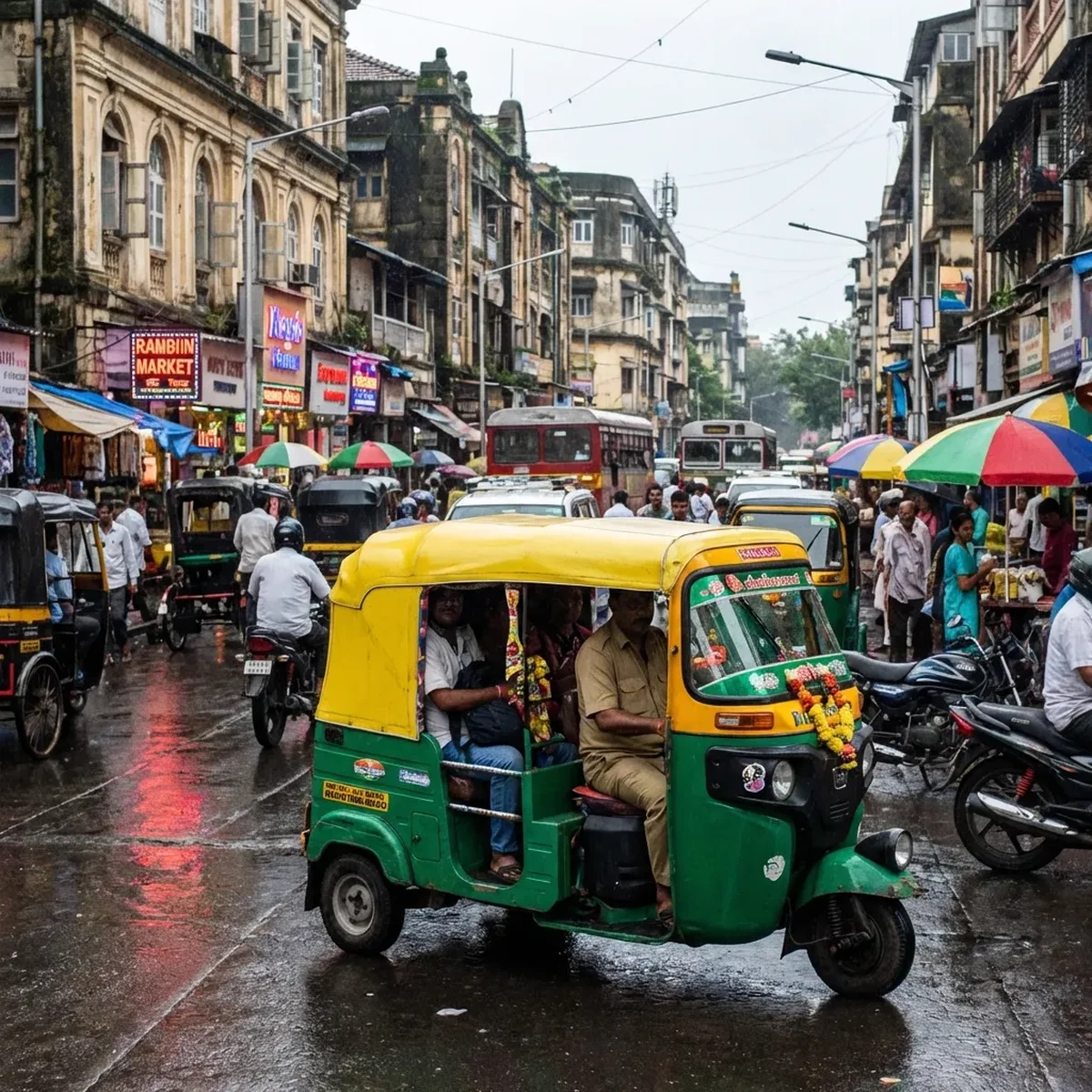
Ever tried explaining to someone who wasn't in India in 2015 what cab rides used to cost? They don't believe you. I moved to Bangalore that year. Ola and Uber were at war, burning venture capital money to subsidize our rides.
Koramangala to Indiranagar. Uber. ₹55. The driver was happy — big incentive bonus. I was happy — cheaper than an auto. The AC worked. Life felt like it had been figured out.
That same ride in 2026? ₹250 on a good day. ₹450 during surge. The driver asks "Cash or Online?" before deciding whether to cancel. The AC is "not working saar."
We're in the middle of a transport inflation problem that goes way beyond petrol prices. It's structural. It's behavioral. And it's not getting better anytime soon, from what I can tell.
The Three Eras of Indian Commuting
| Era | Period | Characteristics | Typical 10km Cost |
|---|---|---|---|
| The Meter Era | Pre-2014 | Autos ruled. Meters worked (mostly). Buses were the only alternative. | ₹80-100 |
| The VC Subsidy Era | 2014-2019 | Ola/Uber dirt cheap. Incentives for everyone. The Golden Age. | ₹120 (Cab) ₹80 (Auto) |
| The Reality Check | 2020-Present | Surge pricing standard. No incentives. Fuel costs high. Traffic jams. | ₹350+ (Cab) ₹200 (Auto) |
We got addicted to cab rides that were priced *below cost*. The actual cost of running a sedan in city traffic is ₹18-22/km. In 2015, we were paying ₹8-10/km. Now, we are paying the real price (plus profit margin), which is ₹30-40/km.
What Happened to the Meter?
About the humble auto. Official meter rates are set by the government, but the actual price you pay? That's decided by the driver standing at the corner.
- 2015 Official Rate: Min ₹25 / Rate ₹13/km
- 2015 Reality: Meter + ₹10.
- 2026 Official Rate: Min ₹30 / Rate ₹15/km (varies by city)
- 2026 Reality: "Meter doesn't work." "One and a half." "Fixed rate ₹200."
Why this gap between official and actual? Because inflation hit drivers too. Hard.
- LPG Cost: ₹40/kg (2015) → ₹75/kg (2026)
- Vehicle Cost: A new Bajaj RE auto cost ₹1.5 Lakhs in 2015. Today it's ₹2.8 Lakhs.
- Rent: Drivers who rent their autos pay ₹300-400 daily to the owner. They start their day at -₹400.
So when you're haggling over ₹20, it's worth remembering his costs have doubled too. Doesn't make paying ₹100 for 2km less painful, though.
Six Cities, Six Different Pricing Universes
Auto fares aren't uniform across India — each state government sets its own tariff, and the gaps between cities can be startling. If you've taken an auto in Mumbai and then tried Bangalore, you know what I mean. They feel like different countries. Here's how fares compare across six metros in 2026.
| City | Base Fare (First 1.5-2 km) | Per-km Rate | Waiting Charges | Night Surcharge |
|---|---|---|---|---|
| Mumbai | ₹23 (first 1.5 km) | ₹16.73/km | ₹3.5 per 4 min | 25% (midnight-5 AM) |
| Delhi | ₹25 (first 2 km) | ₹11/km | ₹0.75 per min | 25% (11 PM-5 AM) |
| Bangalore | ₹30 (first 2 km) | ₹15/km | ₹5 per 5 min | 50% (10 PM-5 AM) |
| Chennai | ₹25 (first 1.8 km) | ₹14/km | ₹3.5 per 5 min | 50% (11 PM-5 AM) |
| Hyderabad | ₹25 (first 2 km) | ₹12/km | ₹2 per 5 min | 50% (10 PM-5 AM) |
| Pune | ₹23 (first 1.5 km) | ₹17/km | ₹3 per 5 min | 25% (midnight-6 AM) |
Mumbai looks cheap on paper because the Maharashtra government has regulated meters more tightly. But there's a catch — drivers use a "fare card" multiplier. Your printed meter reading gets multiplied by about 1.28 to arrive at the actual fare. It confuses commuters and creates room for overcharging, especially if you're new to the city. Pune uses a similar system.
Bangalore is infamous for meter refusals. Official per-km rates are reasonable enough, but in practice most drivers quote a flat fare that's 2-3 times the metered amount. Karnataka's Transport Department has imposed fines for meter refusal, but enforcement is thin. Delhi, surprisingly, has seen better compliance — stricter police action and GPS-linked meters seem to have helped.
Chennai and Hyderabad sit somewhere in between. Chennai drivers used to refuse meters all the time, but app-based services forced a lot of them back to metered fares. Hyderabad benefits from a lower cost of living overall, which keeps both official and street rates more moderate. The 50% night surcharge in South Indian cities versus 25% in Mumbai and Delhi? That's government policy and union negotiations, not any real cost difference.
What It Actually Costs to Drive an Auto
Before cursing the next driver who quotes ₹200 for a 3-km ride, it's worth looking at his side of the equation. The economics of driving an auto in India are rougher than most passengers realize.
A Typical Day's Expenses in 2026
Here's a rough daily P&L for an auto driver in a metro city, based on what drivers in Bangalore and Delhi have told me, checked against transport industry data.
- Daily CNG/LPG cost: An auto running on CNG covers roughly 120-150 km per day in a metro city. At a fuel economy of 22-25 km/kg and CNG priced at ₹75-80/kg, that translates to ₹360-480 in fuel cost daily.
- Vehicle EMI or rent: An owner-driver pays an EMI of ₹6,000-8,000/month for a financed Bajaj RE or TVS King (loan term 3-4 years at 14-18% interest). That is ₹200-270/day. A rented auto costs ₹300-400/day paid to the vehicle owner upfront, before a single passenger is picked up.
- Permit and insurance: Annual permit fees range from ₹3,000-8,000 depending on the state, and full insurance costs ₹6,000-10,000 per year. Combined, that adds ₹25-50/day.
- Maintenance: Tyre replacement, engine servicing, oil changes, and meter calibration add up to roughly ₹1,500-2,500/month, or ₹50-85/day.
- Traffic challans and misc: Parking fines, RTO fees, pollution checks, and the occasional bribe at a check-post add ₹30-50/day on average.
Add it up: an auto driver's fixed daily cost before picking up a single passenger is ₹650 to ₹1,100. On a good day in peak season, a Bangalore driver might gross ₹1,800-2,200 in fares. After expenses, take-home is ₹700-1,100 per day — roughly ₹21,000-33,000 per month. That's barely above minimum wage in many states, for 10-14 hours on the road in heat, traffic, and pollution.
During monsoon or lean summer months, daily earnings drop to ₹1,200-1,500. Net income: below ₹500/day. That's why drivers refuse short trips, demand fixed fares, and won't use the meter. The metered rate just doesn't generate enough income to survive in an expensive city. Can't really blame them, honestly.
The App-Based Disruption: Ola Auto, Uber Auto, and Rapido
When ride-hailing apps entered the auto rickshaw market, they changed the entire dynamic. Ola launched "Ola Auto" in 2014, Uber followed with "UberAuto" in 2015, and for a while it really did seem like meter disputes were over. The app showed you the fare upfront. No haggling. No "meter plus 50." It felt too good to last. And it was.
Phase 1: The Subsidy Gold Rush (2014-2018)
During the early years, both Ola and Uber aggressively subsidized auto rides. Drivers received incentives of ₹2,000-4,000/day on top of fare earnings if they completed a target number of rides. Passengers got coupons and flat-rate discounts. An auto booked through Ola was often cheaper than one hailed on the street because the app absorbed part of the cost.
This era created a massive shift. Lakhs of auto drivers registered on these platforms. In Bangalore alone, an estimated 70,000 auto drivers were active on Ola by 2017. The balance of power briefly shifted from drivers to passengers. Meter refusal became irrelevant when you could book a metered auto on your phone in 60 seconds.
Phase 2: The Squeeze (2019-2023)
As both companies faced pressure from investors to turn profitable, the subsidies dried up. Driver incentives were slashed from ₹3,000/day to ₹500/day and then to virtually nothing. Platform commissions increased from 10% to 20-25% of each fare. Simultaneously, surge pricing was introduced for autos, something that never existed in the traditional market.
The result was a curious paradox. App-based auto fares became more expensive than street autos in many scenarios, while drivers earned less. A 5-km ride that the meter would price at ₹90 could show ₹140 on the app during peak hours, with the driver receiving only ₹105 after commission. Many experienced drivers began logging out of apps and returning to the street, cherry-picking profitable rides by refusing short trips.
Phase 3: Rapido and the Bike-Taxi Disruption (2023-Present)
Then Rapido showed up and undercut everyone. Bike taxis at 40-50% less than autos. A solo commuter who doesn't mind riding pillion pays ₹45-60 for 5 km instead of ₹100-140. That's a big enough difference to change behavior. Rapido also started booking autos in many cities, often cheaper than Ola and Uber because their platform commissions are lower.
The market in 2026 is a mess — in a good way, maybe. Ola Auto, Uber Auto, Rapido Auto, Namma Yatri in Bangalore, BluSmart in Delhi, all competing alongside the traditional street auto guys. Competition has kept fare inflation somewhat in check for app users. But street autos — still 60-70% of all auto trips — run on informal pricing and haggling. Always have.
CNG vs Petrol vs Electric: The Fuel Transition and Its Impact on Fares
The fuel that powers an auto rickshaw directly determines its running cost, and India's auto fleet is in the middle of a messy, multi-decade fuel transition.
In the early 2000s, most autos ran on petrol or a petrol-kerosene mix (the latter being illegal but widespread). The Supreme Court's landmark 1998 order mandating CNG for public transport in Delhi was a turning point. By 2005, Delhi had become an almost entirely CNG-powered auto market. Mumbai followed. Bangalore, Chennai, and Hyderabad were slower to adopt because CNG infrastructure was limited.
The CNG Cost Advantage — and Its Erosion
CNG was initially a clear win for auto drivers. In 2010, CNG cost ₹28/kg in Delhi, and a CNG auto got 25 km/kg, making the fuel cost per kilometre about ₹1.1. By comparison, a petrol auto running at 20 km/litre with petrol at ₹60/litre had a per-km fuel cost of ₹3.0. CNG was almost three times cheaper.
But CNG prices have risen relentlessly. From ₹28/kg in 2010 to ₹42/kg in 2018 to ₹76/kg in 2023 (Delhi), the cost advantage has eroded dramatically. In 2026, the per-km fuel cost for a CNG auto is around ₹3.0-3.5, compared to ₹5.0-5.5 for a petrol auto. The gap has narrowed from 3x to less than 2x. Every CNG price hike triggers immediate demands from auto unions for fare revisions, and the lag between cost increases and government-sanctioned fare hikes creates the "meter nahi chalega" culture.
In cities where CNG penetration is still low — such as Hyderabad and many Tier-2 cities — autos run on LPG or petrol. LPG-powered autos face an additional challenge: the diversion of subsidized domestic LPG cylinders for commercial use is technically illegal but widely practised. Crackdowns on this practice periodically spike fuel costs for LPG auto drivers, adding volatility to their already precarious finances.
The Electric Auto Promise
Electric three-wheelers are probably the biggest shift in the auto rickshaw market since the CNG mandate. Mahindra Electric, Piaggio (Ape E-City), and a bunch of Chinese-origin manufacturers are selling electric autos at ₹2.5-4.0 Lakhs. The running cost is wild: ₹8-10 per full charge covering 80-120 km, which works out to ₹0.08-0.12 per km. About 30 times cheaper than CNG.
But adoption's slow, and for understandable reasons. Charging infrastructure in most Indian cities isn't there yet. A full charge takes 4-6 hours on standard power — mid-day top-ups aren't practical. Range anxiety keeps electric autos on short, predictable routes. Upfront cost is still 20-40% higher than a comparable CNG auto. And banks charge steeper interest (16-20%) on electric three-wheeler loans because they're not sure about the resale value.
Why Official Rates Never Keep Up
Fare revisions in India are deeply political, and that's exactly why official rates are always behind reality. Most states have a Fare Revision Committee — transport department reps, auto unions, consumer groups, sometimes fuel analysts.
Here's how it goes: unions file a petition citing higher fuel, vehicle costs, and cost of living. Committee reviews data, holds public consultations (which get heated), recommends new rates to the state government. Government decides whether to accept, modify, or quietly ignore it. The whole thing takes 6 months to 2 years.
And here's the problem. State governments don't want to approve fare hikes before elections — everyone takes autos, so it affects voters directly. In Karnataka, the last major fare revision before 2024 happened in 2013. An 11-year gap. CNG prices doubled in that time. Vehicle costs nearly tripled. The gap between official and actual fares got so wide that "fixed rate" culture just became normal.
Auto unions have real political muscle. In Mumbai, Kolkata, Chennai, they're tied to major political parties and can call city-wide strikes. A one-day auto strike in Mumbai hits an estimated 35-40 lakh commuters. That's the main pressure tool unions have for faster fare revisions. Strikes cost commuters, sure. But they also reveal something: Indian cities are deeply dependent on auto rickshaws for daily mobility, whether we like to admit it or not.
The Airport Prepaid Scam (It's Legal, Though)
If you've ever landed at an Indian airport and walked to the "Prepaid Auto" counter, you've experienced a peculiar kind of regulated overcharging. These counters exist at airports, major railway stations, and bus terminals. The idea's simple: pay a fixed fare, get a receipt, hand it to the driver. No haggling.
In practice, prepaid fares run 30-60% higher than the equivalent metered fare. A ride from Bangalore Airport (Kempegowda International) to Majestic Bus Station covers about 35 km. The metered fare would be roughly ₹500-550. The prepaid counter charges ₹700-900. At Mumbai's CSMT railway station, a prepaid auto to Dadar (about 5 km) costs ₹120 versus a metered fare of ₹80.
Why the markup? The concession model is the answer. Airport and railway authorities auction prepaid counter licences to private operators who pay a hefty annual fee (₹50 Lakhs to ₹2 Crores at major airports). This fee is recovered by inflating fares. Drivers assigned to prepaid counters also pay a daily commission or queue fee, further pushing up costs. The premium is essentially a "convenience tax" that passengers pay for the comfort of avoiding confrontation.
For budget-conscious travellers, the workaround is to walk 200-500 metres outside the airport or station premises and hail a regular auto or book one on an app. The savings can be substantial — ₹200-400 on a single trip. But at 2 AM after a delayed flight, that walk feels like a lot, and that is precisely what the prepaid system counts on.
Shared Autos: Cheap, Chaotic, Getting Less Cheap
Shared autos are one of India's most creative and chaotic transport ideas. In cities like Chennai, Hyderabad, and parts of Delhi, shared auto routes operate like informal bus lines. You stand at a designated point, an auto pulls up, and you squeeze in with 3-6 other passengers heading in roughly the same direction. The fare is ₹10-20 per person for 2-5 km. It is the cheapest motorized last-mile option available.
But shared auto fares have inflated too. A route in Chennai that cost ₹5 per person in 2012 now costs ₹15-20. In percentage terms, that is a 300-400% increase over 14 years, far outstripping general inflation. The economics are similar to regular autos — fuel costs, vehicle costs, and operating expenses have all risen — but shared autos absorb some of this through higher passenger density.
The concept of "last mile inflation" is important because it disproportionately affects lower-income commuters. A worker earning ₹15,000/month who spends ₹40/day on shared autos (to and from the metro or bus stop) is spending ₹1,000/month — nearly 7% of income — on just the last-mile connection. If that shared auto fare was ₹10/day a decade ago, the last-mile cost has quadrupled while wages may have only doubled.
This is the hidden tax of urban sprawl. As Indian cities expand outward and affordable housing moves further from transit hubs, the last-mile distance grows. A 1-km walk to the bus stop becomes a 3-km auto ride. The cost of being poor in a sprawling city includes a transport penalty that rarely shows up in inflation statistics because shared autos operate informally and are not tracked by the CPI.
Electric Autos Might Actually Fix This
Despite all those barriers, the electric auto shift is coming — and it could reset the entire fare equation. Here's why I think so.
The total cost of ownership (TCO) for an electric auto over 5 years is already approaching parity with CNG autos in cities with adequate charging infrastructure. A CNG auto costs roughly ₹2.5 Lakhs upfront, with fuel and maintenance costs of ₹3.5-4.0 Lakhs over 5 years, totalling ₹6.0-6.5 Lakhs. An electric auto costs ₹3.5 Lakhs upfront (after subsidies), with electricity and maintenance costs of just ₹1.0-1.5 Lakhs over 5 years (no engine oil changes, fewer brake replacements, simpler drivetrain), totalling ₹4.5-5.0 Lakhs. The savings of ₹1.5-2.0 Lakhs over 5 years mean that an electric auto driver could theoretically charge lower fares and still earn more than a CNG counterpart.
Battery swapping technology is the wildcard. Companies like Sun Mobility and Ola Electric are building battery swap stations where a driver pulls in, swaps a depleted battery for a fully charged one in 2-3 minutes, and gets back on the road. This eliminates the 4-6 hour charging downtime that currently makes electric autos impractical for all-day use. If battery swapping scales — and it is scaling fast in cities like Delhi and Bangalore — the range and downtime objections effectively disappear.
Government policy is also accelerating the transition. The Delhi government announced a target of making 50% of new three-wheeler registrations electric by 2025. The CESL (Convergence Energy Services Limited) has placed orders for 5,000 electric three-wheelers for deployment across multiple states. Karnataka offers a ₹30,000 subsidy on top of FAME II. Goa mandated that all new tourist taxis and autos must be electric from 2025.
If all of this plays out, the auto market could see actual fare relief by 2030. Per-km running costs dropping from ₹3-4 (CNG) to under ₹0.50 (electric) would push fares down for the first time in decades. The real question is whether governments and unions pass those savings to passengers or let drivers keep the difference as better income. Knowing how fare politics works, it'll probably be a compromise — slightly cheaper rides, slightly better driver earnings. Both sides could use the relief, honestly.
The Petrol Price Anchor
You can't discuss transport without the elephant in the room: Fuel.
In 2010, petrol was ₹50/liter. We complained. In 2015, it was ₹65/liter. We grumbled. In 2021, it crossed ₹100/liter. We posted memes and accepted our fate.
Today, with petrol hovering around ₹100-110 (depending on state taxes), the "running cost" of a personal vehicle has shot up. A bike that gives 50kmpl effectively costs ₹2.2/km just for fuel. Add maintenance (tyres, oil, service - all 2x costlier) and depreciation, and your personal bike travel costs ₹4/km.
For a car (12kmpl in city traffic), fuel cost alone is ₹9/km. Total ownership cost? Closer to ₹15-18/km.
The Most Expensive Part of Your Commute Is the Shortest
Metros have been a lifeline — Delhi, and increasingly Bangalore, Mumbai, and Chennai. A ₹30 metro ticket for 15km is absurdly good value.
But the problem is getting to and from the metro station.
Scenario: You live 2km from the metro station.
Metro Ride (15km): ₹35
Auto to Station (2km): ₹60 (min fare reality)
Auto from Station (2km): ₹60
Total Cost: ₹155
The "Last Mile" constitutes 20% of the distance but 75% of the cost. This bold inefficiency is why people still take their bikes out despite the traffic.
What Actually Works in 2026
Treating your commute as a financial problem — not just an inconvenience — is probably the right move now. Here's what's working for people I know:
- The EV Switch: If you commute >20km daily on a 2-wheeler, an electric scooter is a no-brainer. Running cost drops from ₹2.5/km to ₹0.25/km. The EMI pays for itself in fuel savings.
- Metro + Yulu/Walking: The only way to beat the Last Mile cost is to eliminate the auto driver. Electric cycles (Yulu) or just walking the 1.5km is healthy for the wallet and the heart.
- Carpooling (Unofficial): Apps like QuickRide faced regulatory hurdles, but WhatsApp groups for office parks are thriving. Sharing that ₹400 cab ride by 3 people makes it viable again.
- Time Shifting: Leaving office at 4:30 PM vs 6:00 PM can save you ₹150 in surge pricing. If your job allows flexi-time, use it as a financial tool.
That ₹55 Uber ride from Koramangala to Indiranagar in 2015? It was never real. We were spending someone else's money and didn't know it. The ₹250 ride in 2026 — that's closer to what getting around an Indian city actually costs. Doesn't mean we have to like it. But maybe we should stop expecting 2015 prices in a 2026 city.