
Boss, let me tell you about the exact moment I realized Bangalore had become a different city. It was March 2023. I was helping my younger cousin, fresh out of engineering college, find a flat in the same area where I had lived when I first moved here. Koramangala. The "affordable" neighborhood we all used to recommend to freshers.
We walked into a broker's office near Sony Signal. The conversation went something like this:
Me: "Bhaiya, 2BHK chahiye. Budget ₹15,000 ke aas-paas."
Broker: *laughs* "Sir, ₹15,000 mein to ek room bhi mushkil hai ab. 2BHK ka starting rate ₹30,000 hai. Koramangala 7th Block hai, premium area."
I stood there, genuinely confused. Premium area? This was the same Koramangala where I had lived in 2010 in a 2BHK for ₹8,000 per month. Same building. Same size flat. But now it was "premium."
That conversation is why I'm writing this article. Because I've lived through one of the most dramatic housing inflation stories in Indian history — the Bangalore rental market explosion. And I think my journey might help you understand what's really happening.
2010: When ₹8,000 Got You a Proper Flat

The classic PG room - where every Bangalore IT professional's journey began
I landed in Bangalore in June 2010. Fresh campus placement, first job, first salary. The company was paying me ₹25,000 per month, which felt like I had won the lottery. Coming from a small town in Maharashtra, I had no idea how money worked in a big city.
My first week, I stayed in a PG in BTM Layout. ₹4,500 per month for a shared room with two other guys. The "breakfast and dinner included" turned out to be the most watery sambar I've ever tasted and rotis that could double as frisbees. But hey, it was my first taste of independence.
After collecting my first paycheck, I decided to upgrade. A colleague told me about a flat in Koramangala 4th Block. The landlord was asking ₹8,000 per month for a 2BHK with a balcony. Two months deposit, 11-month agreement, basic furnishing included.
I called my father to discuss. His reaction: "₹8,000 sirf rent ke liye? Bahut zyada hai." He was right to be concerned. ₹8,000 was more than some people's entire monthly salary back home. But I was young, I had a job, and I wanted my own space.
That flat was nothing special by today's standards. The paint was peeling in corners, the bathroom tiles were cracked, the kitchen had a single burner gas stove. But it was MINE. Well, rented. But you know what I mean.
The Hidden Costs Nobody Warns You About
Now, one thing that no one told me about Bangalore rentals — and this is still true today — is that the rent is just the beginning. Let me break down what that ₹8,000 flat actually cost me every month:
| Expense | Amount (2010) | Amount (2025) |
|---|---|---|
| Base Rent | ₹8,000 | ₹35,000 |
| Maintenance | ₹800 | ₹4,500 |
| Electricity | ₹600 | ₹2,500 |
| Water (Corporation) | Included | ₹500 |
| Internet + Cable | ₹500 | ₹1,200 |
| Gas Cylinder | ₹350 | ₹1,000 |
| Total | ₹10,250 | ₹44,700 |
In 2010, my total housing cost was about 40% of my salary. Today, the same flat would take up almost 60-70% of a fresher's salary. That's the difference. Salaries have doubled. Housing costs have quadrupled.

The eternal negotiation - tenant and landlord trying to find middle ground
The Landlord-Tenant Relationship: A Changing Dynamic
In 2010, landlords needed tenants. The market favored renters. When I first signed my agreement, the landlord, Mr. Murthy, was almost grateful that a "software engineer" (the gold standard of tenants) wanted his flat. He said, "IT company, good boy, no problem. You stay as long as you want."
The annual rent increase was ₹500. Yes, five hundred rupees. A 6% increase, which felt reasonable. Mr. Murthy would call me in December, have a cup of chai in my flat, and say, "Beta, thoda rent badhana padega. ₹500 theek hai?" And we'd shake hands. No broker. No agreement re-registration. Just trust.
Today? Arre, the power dynamic has completely flipped. Landlords in prime areas get 50+ inquiries for every flat. They can pick and choose. "Vegetarian only. No bachelor. No pets. No working from home. No cooking non-veg. 15% annual increase mandatory."
I've heard stories of landlords asking for 6 months advance. 10 months advance. "Because market mein demand hai." And tenants pay because what choice do they have?
What probably surprised me most about this shift is how fast it happened. Between 2018 and 2023, the Bangalore rental market went from "reasonably competitive" to "you're lucky to find anything." I think the post-COVID remote work wave actually made it worse, not better — people who used to commute from Hosur or Tumkur started wanting to live closer to the city center since they weren't going to office daily anyway. More demand for the same flats. Rents in neighborhoods like Koramangala and HSR Layout jumped 40-60% in just two years. A 2BHK in HSR that rented for ₹22,000 in 2020 was going for ₹35,000 by 2023. That's not normal inflation. That's a market losing its mind, honestly.
Something else I've noticed: the definition of "affordable" shifted without anyone announcing it. In 2010, spending 25% of your salary on rent was the guideline. Now, people I know spend 35-40% and don't even think it's unusual. The benchmark moved quietly, and nobody updated the old rule. Maybe it's time someone did.
The IT Boom Changed Everything

The Outer Ring Road at 7 PM - where time and patience come to die
In 2010, Bangalore was already an IT hub. But the scale was different. The ORR (Outer Ring Road) corridor was still developing. Electronic City was considered "far away." Whitefield was for people who had given up on life.
Then came the second wave of IT expansion. Amazon, Google, Microsoft, and dozens of startups set up shop. They needed engineers. Lots of them. And those engineers needed places to live.
The supply side couldn't keep up. Building a new apartment complex takes 3-4 years minimum. Getting approvals, fighting legal battles, dealing with Karnataka's land laws — it's a nightmare. So demand outpaced supply. Prices shot up.
But here's the thing nobody talks about: it's not just salary inflation driving rents. It's also remote work culture. Earlier, people had to live near their offices. Now? They can pay premium for a good neighborhood, work from home, and justify the expense as "quality of life investment."
Koramangala and Indiranagar aren't just residential areas anymore. They're lifestyle destinations. You're not paying ₹35,000 for the flat. You're paying for the chai caf— downstairs, the rooftop bars, the weekend vibes.
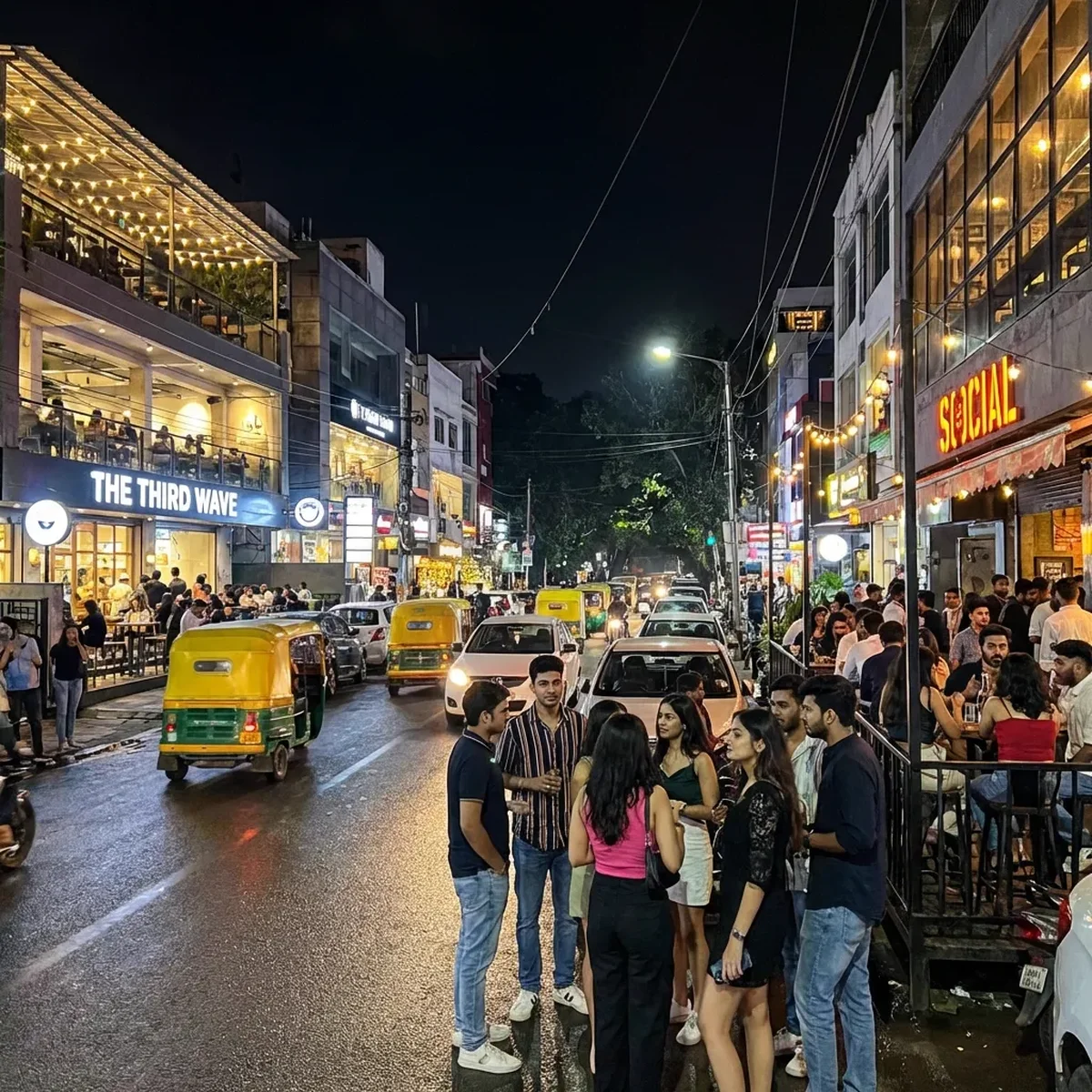
Koramangala at night - the "premium locality" premium in action
My Rent Journey: A 15-Year Timeline
To give you a concrete sense of how this inflation has played out, here's my actual rent history:
- 2010: ₹8,000 (Koramangala 4th Block, 2BHK)
- 2012: ₹9,000 (Same flat, after two increases)
- 2014: ₹12,000 (Moved to Indiranagar, similar flat)
- 2016: ₹16,000 (Same flat, landlord sold building)
- 2017: ₹18,000 (HSR Layout, 2BHK with parking)
- 2019: ₹22,000 (Same flat, annual increases)
- 2021: ₹25,000 (Moved to Sarjapur Road, bigger flat)
- 2023: ₹32,000 (Same flat, post-COVID spike)
- 2025: ₹38,000 (Current - added one room for home office)
That's a 4.75x increase in 15 years. My salary has grown roughly 6x in the same period. So in relative terms, I'm barely ahead. But for someone starting out now? The numbers just don't work.
A fresh engineer joining at ₹6-8 lakh per year takes home maybe ₹45,000-55,000 monthly. A 1BHK in any decent area of Bangalore costs ₹18,000-25,000. That's 35-50% of take-home on rent alone, before food, transport, or anything else. I don't think my generation had this problem — when I started, rent was maybe 20% of take-home. The ratio's shifted in a way that quietly makes the first few years of a career in Bangalore really hard to survive financially. And that's before we even talk about the security deposit.
The Security Deposit Scam
Can we talk about security deposits for a second? Because this is something that genuinely makes my blood boil.
In 2010, the standard was 2 months rent as deposit. ₹16,000. Reasonable. You'd get it back at the end (minus some "painting charges" that everyone expects).
Today, landlords ask for 10-11 months advance. For a ₹35,000 flat, that's ₹3.5-4 lakhs. Just sitting with the landlord. No interest. No benefit to you.
Let's do the math on what this really costs:
If you invested that ₹4 lakh in a simple FD at 7% for 2 years, you'd earn approximately ₹58,000 in interest. By giving it interest-free to your landlord, you're essentially gifting them ₹2,400 per month. Your real rent isn't ₹35,000 — it's ₹37,400.
This is a hidden tax on renters that nobody talks about. And it falls hardest on young professionals who can least afford it.

The rental agreement - read every line, trust me
What I Learned About Fighting Rental Inflation
Over 15 years of renting in Bangalore, I've developed some strategies. Here's what actually works:
1. Negotiate Everything
Every price is negotiable. The broker will tell you "fixed rate sir, owner not flexible." That's nonsense. Every owner has a number they'll accept. Your job is to find it. Start 20% below asking. You'll meet somewhere in between.
2. Build Relationships, Not Just Contracts
My best landlords were the ones I treated like family. Bringing sweets on Diwali, inviting them for chai, fixing small things myself without complaining. When you're a good tenant, landlords are less likely to raise rent aggressively or ask you to leave.
3. Think About Total Cost, Not Just Rent
A ₹30,000 flat in a good building with included parking, good water supply, and working elevators is cheaper than a ₹25,000 flat where nothing works and you're constantly stressed. Factor in mental peace.
4. Consider Buying (If the Math Works)
At some point, the rent-vs-buy equation flips. For context, my ₹38,000 monthly rent equals ₹4.56 lakh per year. A ₹80 lakh flat (EMI roughly ₹65,000) seems expensive, but you're building equity. Run the numbers for your situation.
5. Explore "Unfashionable" Areas
Whitefield was a joke in 2010. "Who lives there?" Today it's just as expensive as Koramangala. The next Whitefield is probably Devanahalli or Yelahanka. Live there for 5 years while the area develops. Your rent savings will fund your future.
The Future of Bangalore Rent

The future - premium towers for premium prices
What happens next? Here's my honest assessment:
Short term (next 2-3 years): Rents will stabilize in premium areas. There's a ceiling on what even IT salaries can support. ₹50,000+ rents will become common, but growth will slow.
Medium term (5-7 years): The metro expansion will open up new areas. Places like Kengeri and parts of North Bangalore will become the "new HSR Layout." People willing to commute will find relief.
Long term (10+ years): Either salaries catch up (unlikely at current pace) or companies start moving to tier-2 cities (already happening - Pune, Hyderabad, Chennai growing faster than Bangalore). The "Bangalore tax" may finally start shrinking.
There's one more thing I think about a lot: remote work. If even 20-30% of tech workers permanently shift to hybrid or remote, the pressure on Bangalore rents eases dramatically. Why pay ₹38,000 for a 2BHK in HSR when you can pay ₹15,000 for the same size in Mysore and come to office twice a month? Some companies are actively encouraging this — Freshworks, for example, has offices in Chennai and Bangalore but doesn't require daily attendance. If this trend holds, we might see a genuine decompression of Bangalore's rental market over the next 5 years. But I'm honestly not sure if companies will stick with remote flexibility or quietly force everyone back to office. That decision, made in a hundred boardrooms, will probably determine whether Bangalore rents plateau or keep climbing.
What I'd Tell Someone Moving to Bangalore Today
If you're moving to Bangalore or already struggling with rent, here's my advice:
- Budget 35-40% of your income for housing — anything more and you're setting yourself up for financial stress
- Negotiate hard on security deposit — even getting it down to 6 months instead of 10 saves you lakhs in opportunity cost
- Consider roommates in your 20s — splitting a nice 3BHK is often better than getting a cramped 1BHK alone
- Build a corpus for buying — in Bangalore, it often makes financial sense to buy within 5-7 years of moving here
- Don't let rent define your life — if Bangalore doesn't work financially, there are other cities. There's no shame in going where you can build wealth, not just survive
One more thing that I think isn't discussed enough: brokers. The standard brokerage in Bangalore is one month's rent, and you pay it every time you move. With rents at ₹35,000+, that's ₹35,000 gone every 2-3 years. Over a decade, you'll spend ₹1-1.5 lakh just on broker fees. Platforms like NoBroker and Flat.in have helped, but they come with their own subscription costs and the listings aren't always up to date. The brokerage system in Bangalore is basically a tax on mobility — it punishes you for moving, which keeps you stuck in overpriced flats longer than you should be.
The City I Couldn't Quit
I love Bangalore. I really do. The weather, the food, the trees (fewer now, sadly), the energy. This city gave me my career, my network, my identity in many ways.
But I can't pretend that the rent situation hasn't changed my relationship with it. Every year, when my landlord calls with the "thoda increase toh hona chahiye" conversation, a part of me wonders: is this sustainable?
The ₹8,000 flat boy from 2010 would be shocked to see me now, spending nearly ₹40,000 on "just rent." But he'd also be proud that I stuck it out, figured out the game, and found my place in this crazy, expensive, wonderful city.
If you're reading this from a PG room, eating watery sambar and waiting for your first paycheck — hang in there. It gets better. Just not cheaper.
Use our Inflation Calculator to see how much rent from different years is worth in today's money.